


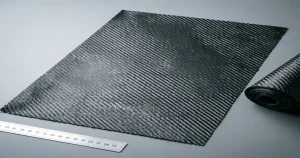
Carbon Fiber Cloth & Fabric Guide 2026 – 3K Twill Prepreg T300
Comprehensive guide to carbon fiber cloth & fabric guide 2026 – 3k twill prepreg t300
Comprehensive guide to carbon fiber cloth & fabric guide 2026 – 3k twill prepreg t300
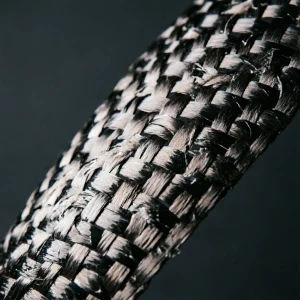
What is Carbon Fiber? Carbon fiber is an advanced composite material consisting of thin, strong crystalline filaments of carbon, typically 5-10 micrometers in diameter. These filaments are bundled into tows (3K, 6K, 12K, etc.) and woven into fabrics or used in unidirectional forms. Carbon fiber offers exceptional strength-to-weight ratio (5x stronger than steel at 1/4 the weight), high stiffness, excellent fatigue resistance, and corrosion resistance, making it indispensable in aerospace, automotive, marine, sports equipment, and industrial applications. Types & Classifications of Carbon Fiber Classification Type Tensile Strength (MPa) Modulus (GPa) Applications By Precursor PAN-based 3,500-7,000 230-600 90% of commercial production, aerospace, automotive By Precursor Pitch-based 2,000-3,000 400-900 High-modulus applications, satellites, thermal management By Precursor Rayon-based 1,000-1,500 40-60 Specialized applications, historical use By Modulus Standard Modulus 3,500-4,900 230-250 General purpose, sports equipment, automotive By Modulus Intermediate Modulus 5,000-6,000 270-320 Aerospace structures, high-performance automotive By Modulus High Modulus 2,500-4,000 350-600 Satellite components, precision instruments By Modulus Ultra-High Modulus 2,000-3,000 600-900 Space applications, specialized scientific equipment Manufacturing Process PAN-Based Carbon Fiber Production Polyacrylonitrile (PAN) precursor undergoes four critical stages: Oxidation/Stabilization: 200-300°C in air, 60-120 minutes Carbonization: 1,000-1,500°C in inert atmosphere (nitrogen) Graphitization (optional): 2,500-3,000°C for high-modulus grades Surface Treatment: Electrochemical oxidation for improved
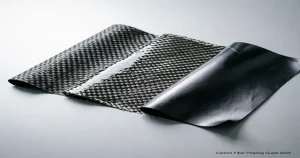
Comprehensive guide to carbon fiber prepreg guide 2025 – 3k carbon fiber & weave patterns
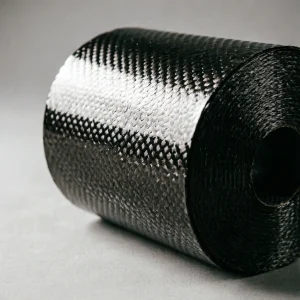
What is Carbon Fiber Prepreg? Carbon fiber prepreg is a composite material consisting of carbon fiber fabric pre-impregnated with resin (typically epoxy) in a controlled manufacturing environment. The term “prepreg” stands for “pre-impregnated,” indicating that the resin system is already applied to the fiber reinforcement before the molding process, offering consistent quality, reduced void content, and superior mechanical properties compared to wet layup methods. Types & Technical Specifications of Carbon Fiber Prepreg Carbon fiber prepreg is available in various resin systems, fiber orientations, and cure temperatures to meet diverse application requirements. Resin System Cure Temperature Tg (°C) Typical Applications Epoxy Standard 120°C (250°F) 100-120 Automotive, sports equipment, consumer electronics Epoxy High-Temp 180°C (350°F) 150-180 Aerospace structural parts, military applications Phenolic 160°C (320°F) 140-160 Fire-resistant panels, railway interiors BMI (Bismaleimide) 200°C (390°F) 200-250 High-temperature aerospace components Cyanate Ester 180°C (350°F) 250-290 Radar-transparent structures, satellite components Core Performance Advantages Carbon fiber prepreg offers significant advantages over traditional wet layup and other composite manufacturing methods: Property Prepreg Wet Layup Advantage Resin Content Control ±2% ±10-15% Consistent quality, reduced weight Void Content <1% 3-5% Superior mechanical properties Fiber Volume Fraction 60-65% 45-55% Higher strength-to-weight ratio Shelf Life 6-12 months (-18°C) Immediate use Production flexibility
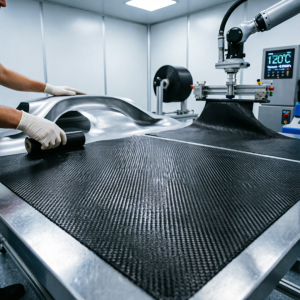
Carbon Fiber Cloth: Comprehensive B2B Guide (2026 Authority Edition) What is Carbon Fiber Cloth? Carbon fiber cloth is a woven textile material made from carbon fiber tows (1K-50K filaments) in plain, twill, or satin weave patterns. It offers exceptional strength-to-weight ratio (5x stronger than steel at 1/4 the weight), high stiffness, and excellent fatigue resistance, widely used in aerospace, automotive, marine, sports equipment, and industrial applications requiring lightweight structural reinforcement. — # Table of Contents 1. [What is Carbon Fiber Cloth?](#what-is-carbon-fiber-cloth) 2. [Types & Technical Specifications](#types–technical-specifications) 3. [Core Performance Advantages](#core-performance-advantages) 4. [Manufacturing Process & Quality Control](#manufacturing-process–quality-control) 5. [TCO Cost Analysis & ROI](#tco-cost-analysis–roi) 6. [Application Fields & Real Cases](#application-fields–real-cases) 7. [Carbon Fiber Cloth vs Alternatives](#carbon-fiber-cloth-vs-alternatives) 8. [Selection Guide & Decision Tree](#selection-guide–decision-tree) 9. [Implementation Challenges & Solutions](#implementation-challenges–solutions) 10. [Market Trends & Future Outlook (2025-2033)](#market-trends–future-outlook) 11. [FAQ](#faq) 12. [Conclusion & Action Recommendations](#conclusion–action-recommendations) — # What is Carbon Fiber Cloth? ## Definition & Basic Concept Carbon fiber cloth is an advanced composite reinforcement material constructed by weaving carbon fiber tows (bundles of continuous filaments) into various fabric patterns. Each carbon fiber filament measures 5-10 micrometers in diameter, approximately 1/5 the thickness of a human hair. These filaments are grouped into tows designated by “K”
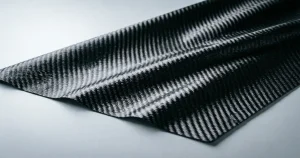
Comprehensive guide to carbon fiber cloth, fabric, 3K, prepreg, yarn. Technical specs, TCO analysis, applications for B2B decision-makers.

Comprehensive guide to carbon fiber sheets: technical specs, TCO analysis, applications in aerospace, automotive, and industrial manufacturing.

Comprehensive guide to carbon fiber fabric: 3K prepreg, UD fabric, 200gsm/300gsm weights, matte/glossy finishes. China supplier wholesale pricing, technical specs, applications.
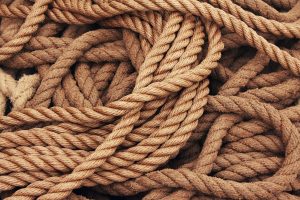
Introduction UHMWPE (Ultra-High Molecular Weight Polyethylene) fiber delivers tensile strength up to 3,530 MPa with density of 0.97 g/cm³, making it 15 times stronger than steel at 40% of aluminum’s weight. This comprehensive guide covers Dyneema fabric, Spectra fiber, UHMWPE rope, sheet applications, technical properties, TCO analysis, and real-world case studies across aerospace, marine, defense, and industrial sectors. Key Decision-Maker Insights: CEO/Boss: 285% ROI over 3 years with 14-month payback period CTO: Compatible with existing composite manufacturing processes CFO: 35% lower lifecycle costs vs. traditional materials Engineer: ISO/ASTM certified specifications with documented test data UHMWPE Properties: Technical Specifications Mechanical Properties Property Value Test Standard Tensile Strength 2,500-3,530 MPa ISO 527-4 Tensile Modulus 70-120 GPa ISO 527-4 Elongation at Break 3-4% ISO 527-4 Density 0.97 g/cm³ ISO 1183 Melting Point 144-152°C ISO 11357 Key Advantages Exceptional Strength-to-Weight Ratio – 15x stronger than steel Low Density – Floats on water (0.97 g/cm³) Excellent Abrasion Resistance – 10x better than nylon Chemical Resistance – Inert to most chemicals UV Resistance – Suitable for outdoor applications Dyneema Fabric Applications Dyneema fabric, manufactured by DSM, represents the premium segment of UHMWPE textiles with applications in: Ballistic Protection: Body armor, helmets, vehicle armor Marine: Sails, ropes,
Test article to verify zonpublisher workflow: content preservation, featured image, categories, tags, and Google Sheets status update.