


-
Table of Contents
“Woven Roving Fabric: Strength Meets Versatility for Unmatched Reinforcement.”
Introduction
Woven roving fabric is a versatile composite material widely recognized for its exceptional strength and durability, making it an ideal choice for reinforcement in various applications. Composed of multiple layers of fiberglass strands woven together, this fabric offers superior tensile strength and resistance to environmental factors, such as moisture and chemicals. Its lightweight nature combined with high structural integrity makes it suitable for use in industries ranging from automotive and aerospace to marine and construction. Woven roving fabric not only enhances the mechanical properties of composite materials but also facilitates ease of handling and application, making it a preferred option for engineers and manufacturers seeking reliable reinforcement solutions.
Benefits of Woven Roving Fabric in Composite Materials
Woven roving fabric has emerged as a pivotal material in the realm of composite materials, offering a multitude of benefits that enhance the performance and durability of various applications. This fabric, characterized by its unique structure of interlaced fibers, provides a robust solution for reinforcing composites, making it an ideal choice for industries ranging from automotive to aerospace. One of the primary advantages of woven roving fabric is its exceptional strength-to-weight ratio. The combination of high tensile strength and lightweight properties allows for the creation of composites that can withstand significant stress while minimizing overall weight. This is particularly crucial in sectors where weight reduction is synonymous with improved fuel efficiency and performance.
Moreover, the versatility of woven roving fabric cannot be overstated. It is available in various fiber types, including glass, carbon, and aramid, each offering distinct properties that can be tailored to specific applications. For instance, glass fiber woven roving is widely used due to its cost-effectiveness and excellent mechanical properties, while carbon fiber options provide superior strength and stiffness for high-performance applications. This adaptability enables engineers and designers to select the most suitable material for their specific needs, thereby optimizing the performance of the final composite product.
In addition to its strength and versatility, woven roving fabric also enhances the overall durability of composite materials. The interlacing of fibers creates a dense structure that improves impact resistance and reduces the likelihood of delamination, a common failure mode in composite materials. This characteristic is particularly beneficial in applications subjected to harsh environmental conditions or mechanical stress, as it ensures that the composite maintains its integrity over time. Furthermore, the fabric’s ability to distribute loads evenly across its surface contributes to the longevity of the composite, making it a reliable choice for demanding applications.
Another significant benefit of woven roving fabric is its compatibility with various resin systems. Whether using epoxy, polyester, or vinyl ester resins, woven roving can be effectively saturated to create a strong bond that enhances the overall performance of the composite. This compatibility not only simplifies the manufacturing process but also allows for greater flexibility in design, as engineers can choose the resin that best suits their application without compromising the reinforcing capabilities of the woven roving.
Additionally, the ease of handling and processing woven roving fabric further contributes to its appeal in composite manufacturing. The fabric can be cut, shaped, and layered with relative ease, allowing for efficient production and customization. This user-friendly nature facilitates the integration of woven roving into complex geometries, ensuring that even intricate designs can benefit from its reinforcing properties. As a result, manufacturers can achieve high-quality composites that meet stringent performance standards while also adhering to production timelines.
In conclusion, the benefits of woven roving fabric in composite materials are manifold, encompassing strength, versatility, durability, compatibility with resin systems, and ease of processing. These attributes make it an indispensable material in various industries, where the demand for high-performance composites continues to grow. As technology advances and the need for innovative solutions increases, woven roving fabric stands out as a reliable choice for reinforcing composite materials, ensuring that they meet the challenges of modern applications with resilience and efficiency.
Applications of Woven Roving Fabric in the Marine Industry
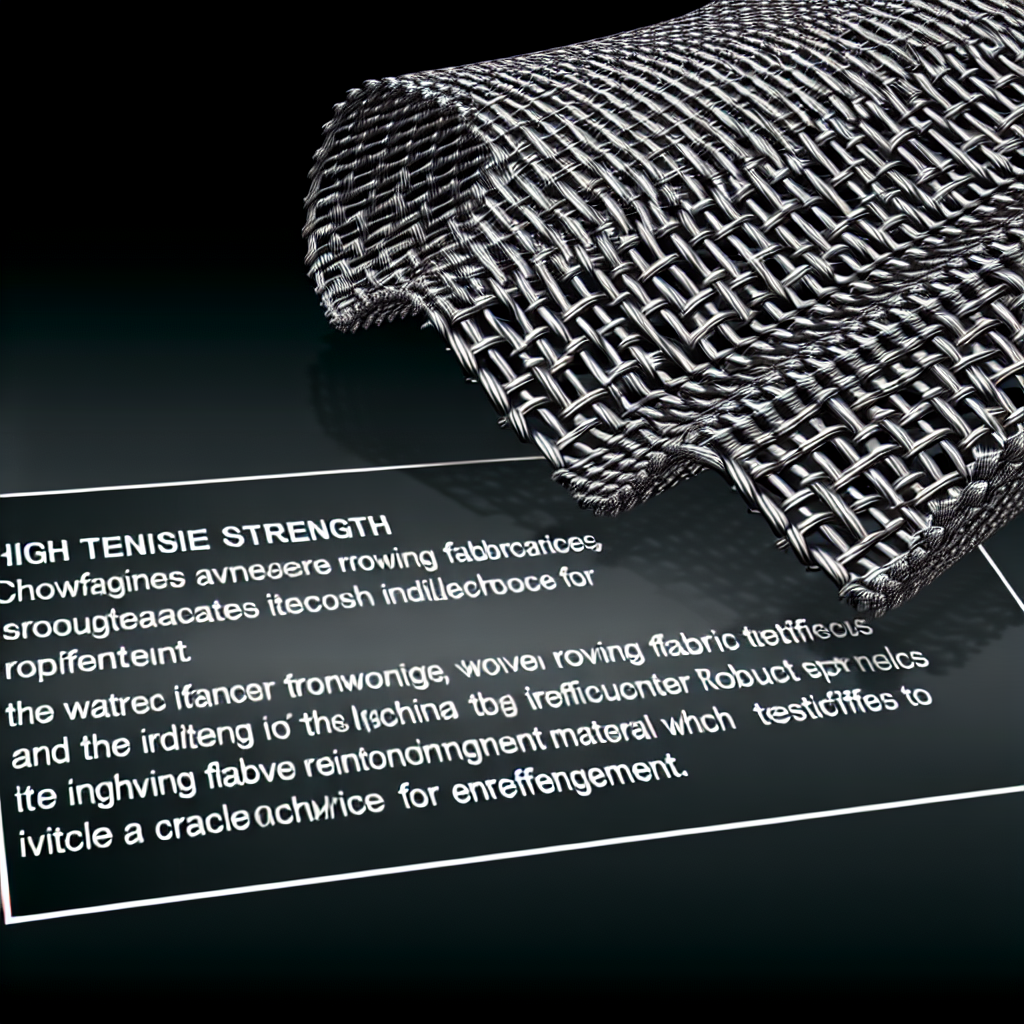
Woven roving fabric has emerged as a pivotal material in the marine industry, primarily due to its exceptional strength-to-weight ratio and versatility. This fabric, composed of continuous strands of glass fibers woven together, offers a robust solution for various applications, particularly in boat building and repair. The inherent properties of woven roving fabric make it an ideal choice for reinforcing structures that must withstand the harsh marine environment, characterized by constant exposure to moisture, salt, and varying temperatures.
One of the most significant applications of woven roving fabric in the marine industry is in the construction of hulls for boats and yachts. The fabric’s high tensile strength allows for the creation of lightweight yet durable hulls that can endure the stresses of waves and impacts. When combined with resin systems, woven roving fabric forms a composite material that not only enhances the structural integrity of the vessel but also contributes to improved fuel efficiency. This is particularly important in an industry where performance and sustainability are increasingly prioritized.
In addition to hull construction, woven roving fabric is extensively used in the reinforcement of decks and bulkheads. These components are critical for maintaining the overall stability and safety of a vessel. By incorporating woven roving fabric into these areas, manufacturers can ensure that the structures can resist deformation and damage over time. Furthermore, the fabric’s compatibility with various resin systems allows for customization based on specific performance requirements, making it a versatile choice for different types of marine vessels.
Another notable application of woven roving fabric is in the repair and maintenance of existing marine structures. Boats and yachts are often subjected to wear and tear, necessitating repairs that can restore their integrity and prolong their lifespan. Woven roving fabric is particularly effective in patching damaged areas, as it can be easily molded to fit the contours of the repair site. When applied with appropriate resins, it creates a seamless bond that enhances the strength of the repaired section, ensuring that the vessel can continue to perform optimally.
Moreover, woven roving fabric is increasingly being utilized in the production of marine accessories, such as fenders and buoys. These accessories require materials that can withstand harsh environmental conditions while maintaining their functionality. The durability and resistance to water absorption of woven roving fabric make it an excellent choice for these applications. By integrating this fabric into the design of marine accessories, manufacturers can enhance their performance and longevity, ultimately benefiting end-users.
As the marine industry continues to evolve, the demand for innovative materials like woven roving fabric is likely to increase. The ongoing emphasis on lightweight construction and enhanced performance will drive further research and development in this area. Additionally, as environmental concerns become more prominent, the use of composite materials that incorporate woven roving fabric may offer sustainable solutions that align with industry goals.
In conclusion, woven roving fabric stands out as a crucial material in the marine industry, with applications ranging from hull construction to repair and accessory production. Its unique properties not only enhance the performance and durability of marine vessels but also contribute to the overall safety and efficiency of operations. As the industry moves forward, the continued integration of woven roving fabric will undoubtedly play a significant role in shaping the future of marine engineering and design.
Comparing Woven Roving Fabric to Other Reinforcement Materials
Woven roving fabric has emerged as a prominent choice in the realm of reinforcement materials, particularly in applications requiring high strength and durability. When comparing woven roving fabric to other reinforcement materials, it becomes evident that its unique properties offer distinct advantages that can significantly enhance the performance of composite structures. To begin with, woven roving fabric is composed of multiple layers of fiberglass strands that are interlaced, creating a robust and flexible material. This construction not only provides excellent tensile strength but also allows for superior load distribution, making it an ideal candidate for various industrial applications.
In contrast, traditional reinforcement materials such as chopped strand mat or unidirectional fabrics may lack the same level of structural integrity. Chopped strand mat, for instance, consists of randomly oriented fibers that, while effective in certain applications, do not provide the same directional strength as woven roving. This limitation can lead to weaknesses in areas where load-bearing capacity is critical. Furthermore, unidirectional fabrics, although strong in one direction, may not offer the multidirectional support that woven roving fabric inherently possesses. This multidirectional capability is particularly beneficial in applications where forces are applied from various angles, ensuring that the composite structure remains resilient under stress.
Moreover, the weight-to-strength ratio of woven roving fabric is another factor that sets it apart from other materials. While some reinforcement options may be lighter, they often compromise on strength, leading to potential failures in demanding environments. Woven roving fabric strikes an optimal balance, providing substantial reinforcement without adding excessive weight. This characteristic is especially advantageous in industries such as aerospace and automotive, where weight reduction is crucial for enhancing fuel efficiency and overall performance.
Additionally, the ease of handling and application of woven roving fabric further contributes to its appeal. Unlike some other reinforcement materials that may require complex layering or specialized techniques for application, woven roving can be easily cut and shaped to fit various molds and structures. This user-friendly nature not only streamlines the manufacturing process but also reduces labor costs and time, making it a practical choice for manufacturers.
Furthermore, woven roving fabric exhibits excellent compatibility with a variety of resin systems, including polyester, vinyl ester, and epoxy. This versatility allows for a wide range of applications, from marine and automotive components to construction and sporting goods. In contrast, some reinforcement materials may be limited in their compatibility with certain resins, which can restrict their usability in specific projects. The ability to seamlessly integrate with different resin systems enhances the overall performance and durability of the final composite product.
In conclusion, when comparing woven roving fabric to other reinforcement materials, it is clear that its unique combination of strength, flexibility, and ease of use positions it as a superior choice for a multitude of applications. Its multidirectional strength, favorable weight-to-strength ratio, and compatibility with various resin systems make it an invaluable asset in the development of high-performance composites. As industries continue to seek innovative solutions for enhancing structural integrity, woven roving fabric stands out as a reliable and effective reinforcement material that meets the demands of modern engineering challenges.
Q&A
1. **What is woven roving fabric?**
Woven roving fabric is a type of composite material made from continuous strands of fiberglass woven together, providing high strength and durability for reinforcement in various applications.
2. **What are the advantages of using woven roving fabric for reinforcement?**
The advantages include high tensile strength, excellent impact resistance, lightweight properties, and compatibility with various resin systems, making it ideal for applications in marine, automotive, and construction industries.
3. **In what applications is woven roving fabric commonly used?**
Woven roving fabric is commonly used in boat hulls, automotive parts, wind turbine blades, and other structural components that require enhanced strength and stiffness.