


-
Table of Contents
“Revolutionizing Strength: Advanced Technologies Powering Carbon Fiber Manufacturing.”
Introduction
Carbon fiber manufacturers utilize a range of advanced technologies to produce high-performance materials that are lightweight, strong, and versatile. Key technologies include automated fiber placement (AFP) and automated tape laying (ATL) for precise material application, as well as resin transfer molding (RTM) and vacuum-assisted resin infusion (VARI) for efficient composite fabrication. Additionally, advancements in 3D printing and computer-aided design (CAD) enable the creation of complex geometries and customized components. Quality control technologies, such as non-destructive testing (NDT) and advanced imaging techniques, ensure the integrity and performance of carbon fiber products. Together, these technologies drive innovation and efficiency in the carbon fiber manufacturing process, catering to industries such as aerospace, automotive, and sports equipment.
Advanced Composite Manufacturing Techniques
In the realm of advanced materials, carbon fiber has emerged as a pivotal component across various industries, including aerospace, automotive, and sporting goods. The manufacturing of carbon fiber involves a series of sophisticated techniques that ensure the material’s strength, lightweight properties, and versatility. At the heart of these processes are advanced composite manufacturing techniques that have evolved significantly over the years, driven by the need for efficiency, precision, and sustainability.
One of the primary methods employed in carbon fiber manufacturing is the use of prepreg materials. Prepreg, short for pre-impregnated composite, consists of carbon fibers that are pre-impregnated with a resin system. This technique allows for better control over the resin-to-fiber ratio, which is crucial for achieving optimal mechanical properties. The prepreg is typically stored at low temperatures to prevent curing before it is laid up in molds. Once the desired shape is achieved, the assembly undergoes a curing process, often in an autoclave, where heat and pressure are applied to solidify the resin and bond the fibers together. This method not only enhances the structural integrity of the final product but also reduces the likelihood of defects, making it a preferred choice for high-performance applications.
In addition to prepreg technology, another significant advancement in carbon fiber manufacturing is the use of automated fiber placement (AFP) systems. AFP technology employs robotic arms to precisely place carbon fiber tows onto a mold, allowing for intricate designs and complex geometries that would be challenging to achieve through traditional hand layup methods. This automation not only increases production speed but also ensures consistent quality and reduces labor costs. Furthermore, the ability to program the placement of fibers enables manufacturers to optimize the orientation of the fibers, thereby enhancing the mechanical properties of the composite in specific directions.
Moreover, the integration of computer numerical control (CNC) machining has revolutionized the post-processing of carbon fiber components. CNC machines allow for precise cutting, drilling, and shaping of carbon fiber parts, ensuring that they meet stringent tolerances required in various applications. This level of precision is particularly important in industries such as aerospace, where even minor deviations can lead to significant performance issues. By utilizing CNC technology, manufacturers can achieve a high degree of accuracy while minimizing waste, thus contributing to more sustainable production practices.
Another noteworthy technique is the use of resin transfer molding (RTM), which involves injecting resin into a closed mold containing dry carbon fiber reinforcement. This method allows for the production of complex shapes with excellent surface finishes and reduced void content. RTM is particularly advantageous for large-scale production, as it can be automated and scaled up efficiently. Additionally, the closed-mold process minimizes emissions and waste, aligning with the growing emphasis on environmentally friendly manufacturing practices.
As the demand for carbon fiber continues to rise, manufacturers are also exploring innovative approaches such as 3D printing with carbon fiber-reinforced polymers. This emerging technology offers the potential for rapid prototyping and customization, enabling manufacturers to create lightweight components with intricate designs that were previously unattainable. The combination of traditional and cutting-edge techniques illustrates the dynamic nature of carbon fiber manufacturing, where advancements are continually reshaping the landscape.
In conclusion, the advanced composite manufacturing techniques employed by carbon fiber manufacturers are diverse and continually evolving. From prepreg materials and automated fiber placement to CNC machining and resin transfer molding, each method contributes to the overall performance and sustainability of carbon fiber products. As technology progresses, the potential for new applications and improvements in manufacturing efficiency will undoubtedly expand, further solidifying carbon fiber’s role as a critical material in modern engineering and design.
Automation and Robotics in Carbon Fiber Production
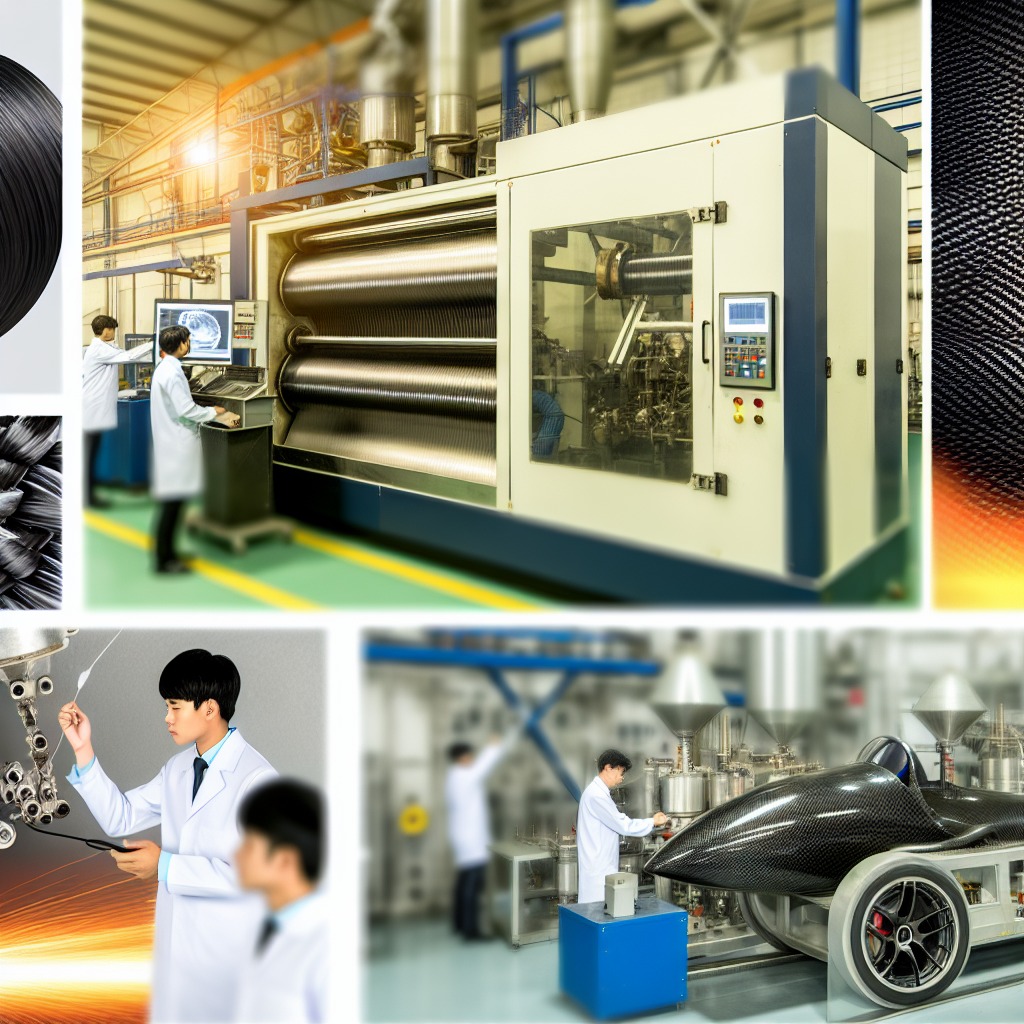
The production of carbon fiber has undergone significant transformation in recent years, largely due to advancements in automation and robotics. These technologies have not only enhanced efficiency but also improved the quality and consistency of carbon fiber products. As manufacturers strive to meet the growing demand for lightweight and high-strength materials across various industries, the integration of automated systems and robotic solutions has become increasingly essential.
One of the primary benefits of automation in carbon fiber production is the ability to streamline processes. Traditional methods often involve labor-intensive tasks that can be time-consuming and prone to human error. By implementing automated systems, manufacturers can optimize production lines, reducing cycle times and increasing output. For instance, automated cutting machines can precisely cut carbon fiber sheets to required dimensions, ensuring uniformity and minimizing waste. This precision is crucial, as even minor discrepancies can affect the performance of the final product.
Moreover, robotics play a pivotal role in handling and assembling carbon fiber components. Robotic arms equipped with advanced sensors and vision systems can perform intricate tasks such as layup and placement of carbon fiber layers with remarkable accuracy. This capability not only enhances the speed of production but also allows for complex geometries that would be challenging to achieve manually. As a result, manufacturers can produce components that meet stringent specifications while maintaining high levels of repeatability.
In addition to improving production efficiency, automation and robotics contribute to enhanced safety in the manufacturing environment. Carbon fiber materials can be hazardous to handle, as the fine fibers can pose respiratory risks and other health concerns. By utilizing automated systems, manufacturers can minimize human exposure to these risks, allowing workers to focus on oversight and quality control rather than direct interaction with potentially harmful materials. This shift not only protects employees but also fosters a safer workplace culture.
Furthermore, the integration of data analytics and machine learning into automated systems has revolutionized the way carbon fiber manufacturers monitor and control their production processes. Real-time data collection allows for continuous monitoring of key performance indicators, enabling manufacturers to identify inefficiencies and implement corrective actions swiftly. Predictive maintenance, powered by machine learning algorithms, can also anticipate equipment failures before they occur, reducing downtime and maintenance costs. This data-driven approach ensures that production remains smooth and uninterrupted, ultimately leading to higher profitability.
As the industry continues to evolve, the role of automation and robotics is expected to expand further. Innovations such as collaborative robots, or cobots, are being developed to work alongside human operators, enhancing productivity while maintaining a high level of flexibility. These systems can adapt to various tasks and environments, making them ideal for the dynamic nature of carbon fiber production. Additionally, advancements in artificial intelligence are paving the way for smarter manufacturing processes, where machines can learn from past experiences and optimize their operations autonomously.
In conclusion, the incorporation of automation and robotics in carbon fiber production has transformed the landscape of manufacturing. By enhancing efficiency, improving safety, and enabling data-driven decision-making, these technologies are not only meeting the demands of the market but also setting new standards for quality and innovation. As manufacturers continue to embrace these advancements, the future of carbon fiber production looks promising, with the potential for even greater improvements on the horizon.
Quality Control Technologies in Carbon Fiber Manufacturing
In the realm of carbon fiber manufacturing, quality control technologies play a pivotal role in ensuring that the final products meet stringent performance and safety standards. The intricate nature of carbon fiber composites necessitates a comprehensive approach to quality assurance, which encompasses various advanced technologies and methodologies. These technologies not only enhance the reliability of the manufacturing process but also contribute to the overall efficiency and sustainability of production.
One of the primary technologies employed in quality control is non-destructive testing (NDT). This method allows manufacturers to evaluate the integrity of carbon fiber components without causing any damage. Techniques such as ultrasonic testing, X-ray imaging, and thermography are commonly utilized to detect internal flaws, such as voids or delaminations, which could compromise the structural integrity of the final product. By implementing NDT, manufacturers can identify defects early in the production process, thereby reducing waste and ensuring that only high-quality materials proceed to the next stages of fabrication.
In addition to NDT, automated inspection systems have become increasingly prevalent in carbon fiber manufacturing. These systems utilize advanced imaging technologies, such as machine vision and laser scanning, to conduct real-time inspections of the materials and components. By employing high-resolution cameras and sophisticated algorithms, manufacturers can achieve a level of precision that manual inspections may not provide. This automation not only accelerates the inspection process but also minimizes human error, leading to more consistent quality outcomes.
Moreover, the integration of data analytics and artificial intelligence (AI) into quality control processes has revolutionized the way manufacturers monitor and manage production quality. By collecting and analyzing data from various stages of the manufacturing process, companies can identify trends and patterns that may indicate potential quality issues. For instance, machine learning algorithms can predict when a particular machine is likely to produce defects based on historical performance data. This predictive capability allows manufacturers to implement proactive measures, such as maintenance or adjustments, before defects occur, thereby enhancing overall product quality.
Furthermore, the use of advanced materials characterization techniques is essential in ensuring that the properties of carbon fiber composites meet specified requirements. Techniques such as scanning electron microscopy (SEM) and differential scanning calorimetry (DSC) provide insights into the microstructural and thermal properties of the materials. By understanding these characteristics, manufacturers can make informed decisions regarding material selection and processing parameters, ultimately leading to improved performance and durability of the final products.
In addition to these technologies, adherence to international quality standards, such as ISO 9001 and AS9100, is crucial for carbon fiber manufacturers. These standards provide a framework for establishing effective quality management systems, ensuring that all processes are documented, monitored, and continuously improved. Compliance with these standards not only enhances product quality but also builds trust with customers and stakeholders, reinforcing the manufacturer’s commitment to excellence.
In conclusion, the landscape of quality control technologies in carbon fiber manufacturing is characterized by a blend of traditional methods and cutting-edge innovations. From non-destructive testing and automated inspection systems to data analytics and advanced materials characterization, these technologies collectively contribute to the production of high-quality carbon fiber composites. As the industry continues to evolve, the integration of these technologies will remain essential in meeting the growing demands for performance, safety, and sustainability in carbon fiber applications.
Q&A
1. **Question:** What manufacturing processes are commonly used in carbon fiber production?
**Answer:** Common manufacturing processes include filament winding, pultrusion, and resin transfer molding (RTM).
2. **Question:** What types of machinery are essential for carbon fiber production?
**Answer:** Essential machinery includes carbonization furnaces, spinning machines, and weaving looms.
3. **Question:** What technologies are employed for quality control in carbon fiber manufacturing?
**Answer:** Technologies such as ultrasonic testing, X-ray inspection, and optical microscopy are used for quality control.