


-
Table of Contents
“3K Windsurfing Mast Carbon Tubes: Unleashing Performance Through Precision Filament Winding.”
Introduction
3K Windsurfing Mast Carbon Tubes are engineered for optimal performance and durability, making them a popular choice among windsurfing enthusiasts. The use of filament winding in their construction is crucial, as it allows for precise control over the orientation and distribution of carbon fibers, resulting in a lightweight yet strong structure. This manufacturing technique enhances the mast’s stiffness and flexibility, providing better responsiveness and handling on the water. Additionally, filament winding minimizes material waste and ensures consistent quality, making it an essential process in the production of high-performance windsurfing equipment.
Advantages of Filament Winding in 3K Windsurfing Mast Carbon Tubes
The construction of 3K windsurfing mast carbon tubes has evolved significantly over the years, with filament winding emerging as a pivotal manufacturing technique that enhances performance and durability. This method involves the precise placement of continuous fibers around a mandrel, allowing for a high degree of control over the orientation and density of the fibers. As a result, the advantages of filament winding in the production of 3K windsurfing mast carbon tubes are manifold, contributing to the overall efficacy and reliability of these essential components.
One of the primary benefits of filament winding is its ability to optimize the strength-to-weight ratio of the carbon tubes. By strategically orienting the carbon fibers, manufacturers can create a structure that maximizes tensile strength while minimizing weight. This is particularly crucial in windsurfing, where every ounce counts and the performance of the mast directly influences the rider’s experience. The lightweight nature of filament-wound carbon tubes allows for greater maneuverability and responsiveness on the water, enabling windsurfers to achieve higher speeds and improved control.
Moreover, filament winding enhances the overall structural integrity of the mast. The continuous fibers provide a seamless distribution of stress across the entire length of the tube, reducing the likelihood of weak points that could lead to failure under extreme conditions. This uniformity is essential for windsurfing masts, which are subjected to significant forces during use. By employing filament winding, manufacturers can produce masts that not only withstand the rigors of windsurfing but also maintain their performance over time, thereby offering a longer lifespan compared to traditional manufacturing methods.
In addition to strength and durability, filament winding allows for greater design flexibility. Manufacturers can easily adjust the winding patterns and fiber orientations to tailor the performance characteristics of the mast to specific riding styles or conditions. For instance, a windsurfer who prefers high-speed racing may benefit from a mast designed with a stiffer profile, while a rider focused on freestyle tricks might opt for a more flexible design. This customization capability ensures that windsurfers can select equipment that aligns with their individual preferences and enhances their overall experience on the water.
Furthermore, the efficiency of the filament winding process contributes to its appeal in the production of 3K windsurfing mast carbon tubes. The automated nature of the winding process allows for consistent quality and reduced production times, which can lead to lower costs for consumers. As the demand for high-performance windsurfing equipment continues to grow, the ability to produce reliable and high-quality masts efficiently becomes increasingly important. This efficiency not only benefits manufacturers but also ensures that windsurfers have access to advanced technology without prohibitive price tags.
Lastly, the environmental impact of filament winding should not be overlooked. As sustainability becomes a more pressing concern in the manufacturing sector, the ability to produce lightweight and durable products with less material waste is a significant advantage. Filament winding minimizes excess material usage, contributing to a more sustainable approach to windsurfing equipment production.
In conclusion, the advantages of filament winding in the creation of 3K windsurfing mast carbon tubes are clear. From enhancing strength and durability to providing design flexibility and promoting efficiency, this innovative manufacturing technique plays a crucial role in advancing windsurfing technology. As the sport continues to evolve, the importance of high-quality, performance-oriented equipment will only grow, making filament winding an essential consideration for both manufacturers and enthusiasts alike.
The Impact of Filament Winding on Performance and Durability
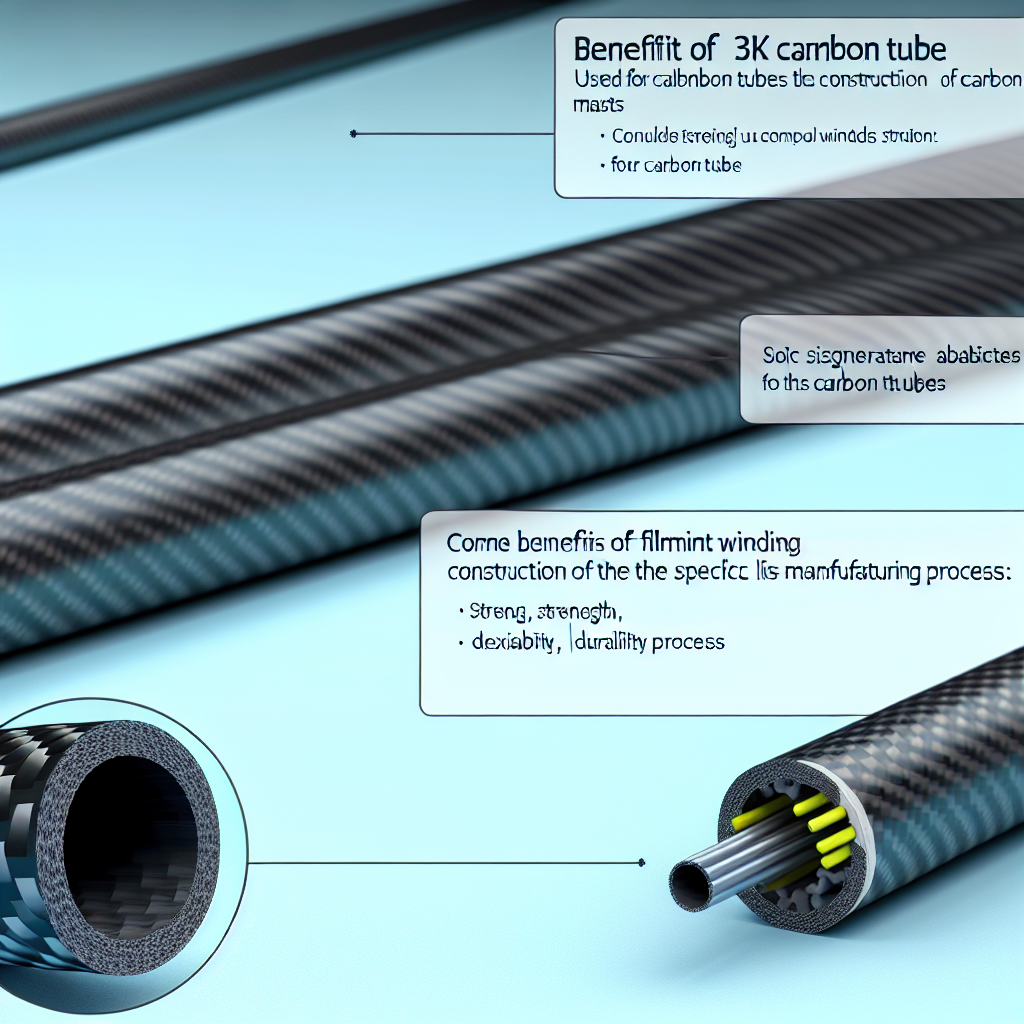
The performance and durability of windsurfing masts are critical factors that can significantly influence a sailor’s experience on the water. Among the various manufacturing techniques employed in the production of these essential components, filament winding has emerged as a pivotal process, particularly for 3K windsurfing mast carbon tubes. This advanced method not only enhances the structural integrity of the masts but also optimizes their performance characteristics, making it a preferred choice among manufacturers and enthusiasts alike.
Filament winding involves the precise application of continuous strands of carbon fiber around a mandrel, which is then cured to form a rigid structure. This technique allows for the creation of complex geometries that are tailored to meet specific performance requirements. As a result, the masts produced through filament winding exhibit superior strength-to-weight ratios compared to those made using traditional methods. This is particularly important in windsurfing, where every ounce of weight can affect maneuverability and speed. By utilizing high-modulus carbon fibers, manufacturers can produce masts that are not only lightweight but also incredibly stiff, providing sailors with the responsiveness they need to navigate challenging conditions.
Moreover, the orientation of the carbon fibers during the winding process can be strategically manipulated to enhance specific performance attributes. For instance, by varying the angle of the fibers, manufacturers can create masts that exhibit different flex characteristics. This flexibility is crucial for windsurfing, as it allows the mast to absorb the energy from the wind while maintaining optimal control. A well-designed mast will flex in response to gusts, providing the sailor with a smoother ride and reducing the risk of equipment failure. Consequently, the ability to customize the fiber orientation through filament winding directly contributes to the overall performance of the windsurfing mast.
In addition to performance benefits, filament winding significantly improves the durability of carbon tubes. The continuous nature of the fibers creates a composite structure that is less prone to delamination and other forms of structural failure. This is particularly advantageous in the demanding environment of windsurfing, where masts are subjected to extreme forces and potential impacts. The resilience offered by filament-wound carbon tubes ensures that they can withstand the rigors of regular use, thereby extending their lifespan and reducing the need for frequent replacements. This durability not only enhances the value of the investment for windsurfers but also contributes to a more sustainable approach to equipment usage.
Furthermore, the consistency achieved through filament winding is another aspect that cannot be overlooked. Unlike traditional methods that may introduce variability in the material properties, filament winding allows for a high degree of precision in the manufacturing process. This consistency translates into predictable performance, enabling sailors to rely on their equipment under various conditions. As a result, windsurfers can focus on honing their skills and enjoying their time on the water, rather than worrying about the reliability of their gear.
In conclusion, the impact of filament winding on the performance and durability of 3K windsurfing mast carbon tubes is profound. By enhancing strength-to-weight ratios, allowing for customizable flex characteristics, and improving overall durability, this manufacturing technique has revolutionized the windsurfing industry. As technology continues to advance, it is likely that filament winding will play an even more significant role in the development of high-performance windsurfing equipment, ensuring that sailors can push their limits with confidence.
Comparing Filament Winding Techniques for Optimal Windsurfing Experience
When it comes to enhancing the performance and durability of windsurfing masts, the choice of manufacturing technique plays a crucial role. Among the various methods available, filament winding has emerged as a preferred technique, particularly for 3K windsurfing mast carbon tubes. This method involves the precise placement of continuous fibers around a mandrel, allowing for a high degree of control over the orientation and density of the fibers. As a result, filament winding not only optimizes the structural integrity of the mast but also significantly influences the overall windsurfing experience.
To begin with, one of the primary advantages of filament winding is its ability to create a uniform distribution of carbon fibers. This uniformity is essential because it directly impacts the strength-to-weight ratio of the mast. By ensuring that the fibers are aligned in the direction of the expected loads, filament winding enhances the mast’s resistance to bending and torsional forces. Consequently, windsurfers can enjoy a more responsive and stable ride, particularly in challenging conditions where performance is paramount. The precision of this technique allows manufacturers to tailor the mast’s characteristics to suit different styles of windsurfing, whether it be freestyle, slalom, or wave riding.
Moreover, filament winding facilitates the use of high-modulus carbon fibers, which are known for their exceptional stiffness and lightweight properties. This is particularly beneficial for competitive windsurfers who require equipment that can withstand the rigors of high-speed maneuvers while minimizing fatigue. The ability to incorporate varying fiber types and orientations within the same mast further enhances its performance capabilities. For instance, a mast designed with a higher concentration of fibers in specific areas can provide additional support where it is most needed, thereby improving overall handling and control.
In addition to performance benefits, filament winding also contributes to the longevity of windsurfing masts. The continuous nature of the fibers reduces the likelihood of weak points that can lead to failure under stress. This durability is especially important for windsurfers who frequently encounter harsh marine environments, where exposure to saltwater and UV rays can degrade materials over time. By utilizing filament winding, manufacturers can produce masts that not only perform exceptionally well but also stand the test of time, offering a better return on investment for enthusiasts and professionals alike.
Transitioning from performance to maintenance, it is worth noting that masts produced through filament winding are generally easier to repair than those made using other techniques. In the event of damage, the localized nature of the fiber placement allows for targeted repairs without compromising the integrity of the entire structure. This aspect is particularly appealing to windsurfers who value the ability to maintain their equipment over time, ensuring that they can continue to enjoy their sport without the need for frequent replacements.
In conclusion, the advantages of filament winding techniques in the production of 3K windsurfing mast carbon tubes are manifold. From enhancing performance through optimized fiber alignment to ensuring durability and ease of maintenance, this method stands out as a superior choice for both recreational and competitive windsurfers. As the sport continues to evolve, the importance of advanced manufacturing techniques like filament winding will undoubtedly play a pivotal role in shaping the future of windsurfing equipment, ultimately leading to an enriched experience on the water.
Q&A
1. **What is filament winding in the context of 3K windsurfing mast carbon tubes?**
Filament winding is a manufacturing process that involves wrapping continuous strands of carbon fiber around a mandrel in a specific pattern, which enhances the strength and stiffness of the windsurfing mast.
2. **How does filament winding improve the performance of windsurfing masts?**
Filament winding allows for precise control over the orientation and density of the carbon fibers, resulting in a lightweight yet strong structure that can withstand high stress and provide better responsiveness during windsurfing.
3. **What are the benefits of using 3K carbon fiber in filament winding for windsurfing masts?**
3K carbon fiber, consisting of 3,000 filaments, offers a good balance of strength, weight, and flexibility, making it ideal for windsurfing masts that require durability and performance without excessive weight.