


-
Table of Contents
“Strengthen Your Concrete: Optimize Durability with 12mm–18mm Reinforcement Carbon Fiber.”
Introduction
Reinforcement carbon fiber in the 12mm–18mm range is increasingly recognized for its superior strength-to-weight ratio and corrosion resistance, making it an ideal choice for concrete reinforcement in various construction applications. This advanced material is particularly beneficial in environments where traditional steel reinforcement may be prone to rust or degradation, such as in coastal areas or structures exposed to harsh chemicals. Its lightweight nature allows for easier handling and installation, reducing labor costs and time on site. Additionally, carbon fiber reinforcement can enhance the durability and longevity of concrete structures, making it a preferred option for high-performance applications, including bridges, parking garages, and industrial facilities. Understanding when to use 12mm–18mm carbon fiber reinforcement is crucial for optimizing structural integrity and ensuring the longevity of concrete constructions.
Benefits of 12mm–18mm Reinforcement Carbon Fiber in Concrete Applications
The use of 12mm–18mm reinforcement carbon fiber in concrete applications has gained significant attention in recent years due to its numerous advantages over traditional reinforcement materials. One of the primary benefits of carbon fiber is its exceptional strength-to-weight ratio. This characteristic allows for the creation of lighter structures without compromising structural integrity. Consequently, engineers and architects can design more efficient frameworks that require less material, ultimately leading to reduced costs and a lower environmental impact.
In addition to its lightweight properties, carbon fiber exhibits remarkable resistance to corrosion. Unlike steel, which can deteriorate when exposed to moisture and chemicals, carbon fiber remains unaffected by such environmental factors. This durability makes it an ideal choice for applications in harsh conditions, such as marine environments or areas with high levels of de-icing salts. By incorporating 12mm–18mm carbon fiber reinforcement, structures can achieve a longer lifespan, reducing the need for frequent repairs and maintenance. This longevity not only enhances the overall sustainability of the project but also provides significant cost savings over time.
Moreover, the flexibility of carbon fiber allows for innovative design possibilities. Engineers can utilize its unique properties to create complex shapes and forms that would be challenging to achieve with traditional materials. This adaptability is particularly beneficial in architectural applications where aesthetic considerations are paramount. By integrating carbon fiber reinforcement, designers can push the boundaries of conventional construction, resulting in visually striking and structurally sound buildings.
Another noteworthy advantage of 12mm–18mm carbon fiber reinforcement is its ease of installation. The lightweight nature of carbon fiber simplifies handling and reduces labor costs during construction. Additionally, the material can be easily cut and shaped to fit specific project requirements, allowing for a more streamlined construction process. This efficiency not only accelerates project timelines but also minimizes disruptions on-site, contributing to a smoother workflow.
Furthermore, carbon fiber’s low thermal conductivity is an essential factor in energy-efficient building design. By incorporating this material into concrete applications, structures can better regulate temperature, leading to improved energy performance. This characteristic is particularly advantageous in climates with extreme temperature fluctuations, where maintaining a stable indoor environment is crucial for occupant comfort and energy conservation.
In terms of performance, 12mm–18mm carbon fiber reinforcement enhances the overall load-bearing capacity of concrete structures. This increased strength allows for the construction of thinner slabs and reduced cross-sections, which can be particularly beneficial in high-rise buildings or bridges where weight is a critical consideration. As a result, engineers can optimize their designs to achieve maximum efficiency while ensuring safety and compliance with regulatory standards.
In conclusion, the benefits of 12mm–18mm reinforcement carbon fiber in concrete applications are manifold. From its superior strength-to-weight ratio and corrosion resistance to its design flexibility and ease of installation, carbon fiber presents a compelling alternative to traditional reinforcement materials. As the construction industry continues to evolve, the adoption of innovative materials like carbon fiber will play a pivotal role in shaping the future of sustainable and efficient building practices. By leveraging these advantages, engineers and architects can create structures that not only meet the demands of modern society but also contribute positively to the environment.
Key Considerations for Using Carbon Fiber Reinforcement in Concrete
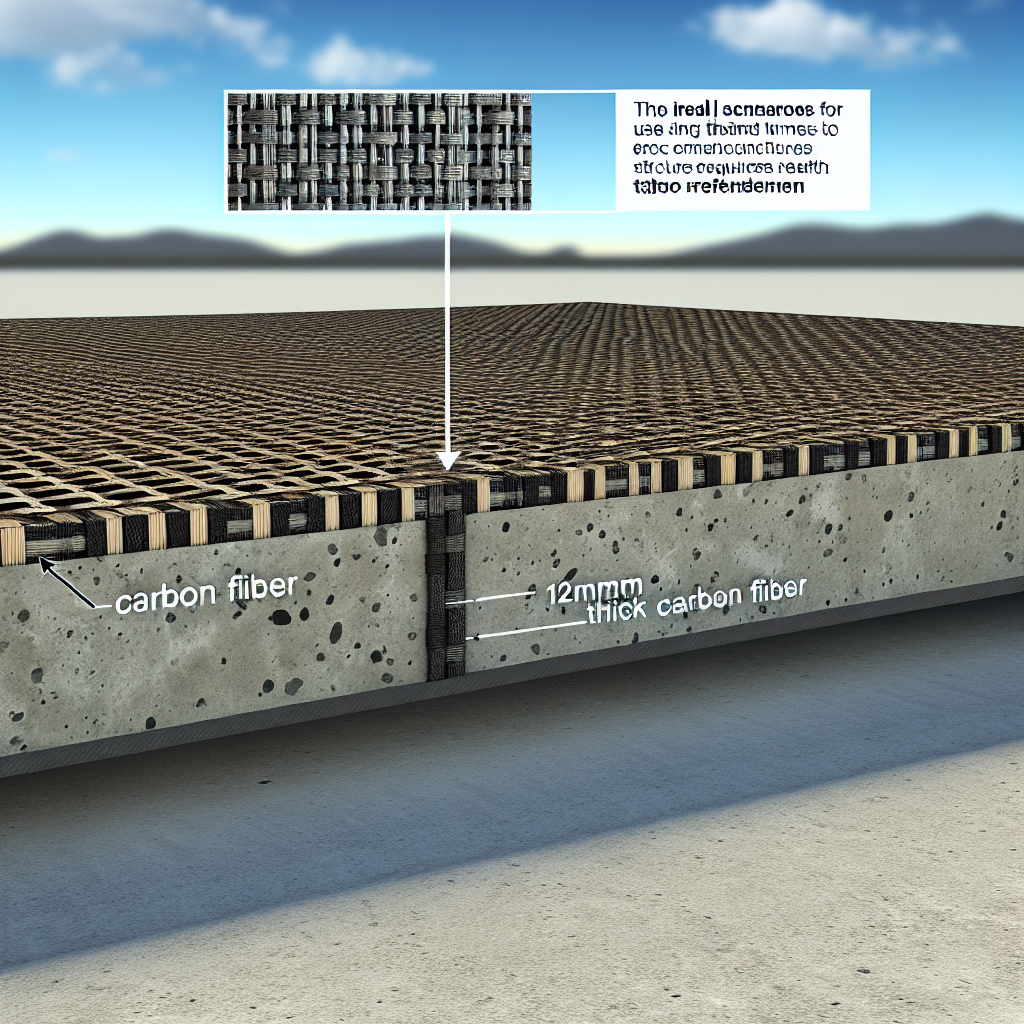
When considering the use of carbon fiber reinforcement in concrete, particularly in the range of 12mm to 18mm, several key factors must be taken into account to ensure optimal performance and longevity of the structure. First and foremost, it is essential to understand the unique properties of carbon fiber, which include its high tensile strength, lightweight nature, and resistance to corrosion. These characteristics make carbon fiber an attractive alternative to traditional steel reinforcement, especially in environments where moisture and chemicals can lead to deterioration.
One of the primary considerations when opting for carbon fiber reinforcement is the specific application and loading conditions of the concrete structure. For instance, in scenarios where the concrete is subjected to high tensile stresses, such as in bridge decks or parking garages, carbon fiber can provide significant advantages. Its ability to withstand tensile forces without adding excessive weight to the structure allows for more efficient designs and can lead to reduced material costs. Furthermore, the lightweight nature of carbon fiber can facilitate easier handling and installation, which is particularly beneficial in projects with stringent timelines.
In addition to the mechanical properties, the environmental conditions surrounding the concrete structure play a crucial role in the decision to use carbon fiber reinforcement. In coastal areas or regions with high humidity, traditional steel reinforcement is prone to corrosion, which can compromise the integrity of the concrete over time. In contrast, carbon fiber is inherently resistant to corrosion, making it an ideal choice for structures exposed to harsh environmental conditions. This durability not only extends the lifespan of the concrete but also reduces maintenance costs over time, providing a compelling economic argument for its use.
Moreover, the compatibility of carbon fiber with various concrete mixes is another important consideration. While carbon fiber can be used in conjunction with standard concrete, it is often beneficial to explore specialized mixes that enhance the bonding between the fiber and the concrete matrix. This improved bond can lead to better load distribution and overall performance of the reinforced structure. Therefore, consulting with material engineers and conducting thorough testing during the design phase can help ensure that the selected concrete mix will optimize the benefits of carbon fiber reinforcement.
Another factor to consider is the installation process. While carbon fiber reinforcement can be easier to handle than traditional steel, it still requires careful attention to detail during installation. Proper alignment and placement are critical to achieving the desired structural performance. Additionally, the curing process of the concrete must be monitored closely, as the interaction between the carbon fiber and the curing agents can influence the final strength and durability of the concrete.
Finally, it is essential to evaluate the cost implications of using carbon fiber reinforcement. While the initial investment may be higher than that of traditional steel reinforcement, the long-term benefits, including reduced maintenance and extended service life, can offset these costs. Therefore, conducting a comprehensive cost-benefit analysis is advisable to determine the most economically viable option for a given project.
In conclusion, the decision to use 12mm to 18mm carbon fiber reinforcement in concrete should be based on a thorough understanding of the specific application, environmental conditions, compatibility with concrete mixes, installation requirements, and overall cost implications. By carefully considering these factors, engineers and architects can make informed decisions that enhance the performance and durability of their concrete structures.
Comparing Traditional Reinforcement Methods with Carbon Fiber Solutions
In the realm of construction and civil engineering, the choice of reinforcement materials is crucial for ensuring the structural integrity and longevity of concrete structures. Traditionally, steel reinforcement bars (rebar) have been the go-to solution for enhancing the tensile strength of concrete. However, the advent of advanced materials such as carbon fiber has prompted a reevaluation of conventional methods. When comparing traditional reinforcement methods with carbon fiber solutions, it becomes evident that each has its own set of advantages and limitations, which can significantly influence project outcomes.
Steel rebar, while widely used and understood, presents several challenges. One of the most significant drawbacks is its susceptibility to corrosion, particularly in environments exposed to moisture or de-icing salts. This corrosion can lead to spalling, which compromises the structural integrity of concrete over time. In contrast, carbon fiber reinforcement, particularly in the 12mm to 18mm range, offers a remarkable resistance to environmental factors. Carbon fiber is inherently non-corrosive, which means that structures reinforced with this material can maintain their strength and durability over extended periods, even in harsh conditions.
Moreover, the weight of the materials plays a critical role in construction logistics. Steel rebar is considerably heavier than carbon fiber, which can complicate handling and installation processes. The lightweight nature of carbon fiber not only simplifies transportation and placement but also reduces the overall load on the structure itself. This reduction in weight can be particularly advantageous in applications where minimizing dead load is essential, such as in retrofitting existing structures or in seismic zones where flexibility is paramount.
In terms of tensile strength, carbon fiber outperforms traditional steel reinforcement. The high tensile strength-to-weight ratio of carbon fiber allows for thinner and more efficient designs, which can lead to cost savings in material usage and labor. Additionally, the flexibility of carbon fiber enables it to be molded into various shapes and configurations, providing engineers with greater design freedom. This adaptability can be particularly beneficial in complex architectural projects where traditional reinforcement methods may fall short.
However, it is essential to consider the cost implications of using carbon fiber reinforcement. While the initial investment may be higher than that of steel rebar, the long-term benefits often justify the expense. The reduced maintenance costs associated with carbon fiber, due to its resistance to corrosion and degradation, can lead to significant savings over the lifespan of a structure. Furthermore, the potential for faster installation times can also contribute to overall project efficiency, offsetting some of the initial costs.
Despite these advantages, it is crucial to recognize that carbon fiber reinforcement is not a one-size-fits-all solution. The specific requirements of a project, including load conditions, environmental factors, and budget constraints, must be carefully evaluated. In some cases, a hybrid approach that combines both traditional and advanced materials may yield the best results, leveraging the strengths of each to create a more resilient structure.
In conclusion, the comparison between traditional reinforcement methods and carbon fiber solutions reveals a landscape rich with possibilities. While steel rebar has been a reliable choice for decades, the unique properties of carbon fiber, particularly in the 12mm to 18mm range, present compelling advantages that can enhance the performance and longevity of concrete structures. As the construction industry continues to evolve, embracing innovative materials like carbon fiber may very well be the key to building safer, more durable, and more efficient infrastructures for the future.
Q&A
1. **Question:** When should 12mm–18mm reinforcement carbon fiber be used in concrete applications?
**Answer:** It should be used in applications requiring high tensile strength and low weight, such as in thin slabs, precast elements, or structures exposed to corrosive environments.
2. **Question:** What are the benefits of using 12mm–18mm reinforcement carbon fiber in concrete?
**Answer:** The benefits include reduced weight, increased durability, resistance to corrosion, and improved tensile strength compared to traditional steel reinforcement.
3. **Question:** Are there specific conditions that favor the use of 12mm–18mm reinforcement carbon fiber over steel?
**Answer:** Yes, it is favored in conditions where weight reduction is critical, in structures subject to seismic activity, or in environments with high moisture or chemical exposure that could lead to steel corrosion.