


-
Table of Contents
“Fiber Glass Cloth vs Woven Glass Fabric: Unraveling the Key Material Differences for Superior Performance.”
Introduction
Fiber glass cloth and woven glass fabric are both essential materials in various industries, particularly in composites and construction. While they share a common base of fiberglass, their manufacturing processes and applications differ significantly. Fiber glass cloth typically refers to a non-woven, mat-like structure that offers flexibility and ease of handling, making it suitable for applications requiring a lightweight and conformable material. In contrast, woven glass fabric is created by interlacing glass fibers in a specific pattern, resulting in a more robust and durable product that provides superior strength and stability. Understanding these key material differences is crucial for selecting the appropriate type for specific applications, whether in automotive, aerospace, or marine industries.
Fiber Glass Cloth: Properties and Applications
Fiber glass cloth, a versatile material composed of woven glass fibers, is renowned for its exceptional strength, durability, and resistance to various environmental factors. This unique composition allows fiber glass cloth to serve a multitude of applications across diverse industries, including automotive, aerospace, construction, and marine sectors. The properties of fiber glass cloth are primarily attributed to the inherent characteristics of glass fibers, which are known for their lightweight nature and high tensile strength. These fibers are typically produced through a process of melting silica and other raw materials, followed by drawing the molten glass into fine strands. The resulting fibers are then woven into a cloth, creating a fabric that is both robust and flexible.
One of the most significant properties of fiber glass cloth is its resistance to heat and fire. This characteristic makes it an ideal choice for applications where thermal insulation is crucial. For instance, in the aerospace industry, fiber glass cloth is often used in the construction of aircraft components, where it can withstand high temperatures without compromising structural integrity. Additionally, its fire-resistant properties make it suitable for use in building materials, such as fireproofing systems and insulation products, ensuring safety in residential and commercial structures.
Moreover, fiber glass cloth exhibits excellent chemical resistance, which further enhances its applicability in various environments. It can withstand exposure to acids, alkalis, and solvents, making it a preferred material in the chemical processing industry. In this context, fiber glass cloth is often utilized in the production of tanks, pipes, and other equipment that require durability against corrosive substances. This resistance not only prolongs the lifespan of the products but also reduces maintenance costs, making it a cost-effective solution for manufacturers.
In addition to its physical properties, fiber glass cloth is also valued for its lightweight nature. This attribute is particularly advantageous in industries where weight reduction is critical, such as automotive and aerospace. By incorporating fiber glass cloth into their designs, manufacturers can create lighter components that contribute to improved fuel efficiency and overall performance. Furthermore, the flexibility of fiber glass cloth allows for easy manipulation during the manufacturing process, enabling it to be molded into complex shapes and structures.
The versatility of fiber glass cloth extends to its compatibility with various resin systems, including epoxy, polyester, and vinyl ester. This compatibility allows for the creation of composite materials that combine the strengths of both the glass fibers and the resin, resulting in products that exhibit enhanced mechanical properties. For example, when combined with epoxy resin, fiber glass cloth can produce a composite that is not only strong and lightweight but also exhibits superior adhesion and moisture resistance. This makes it an ideal choice for applications in boat building, where the combination of strength and water resistance is paramount.
In conclusion, fiber glass cloth stands out as a material with a unique combination of properties that make it suitable for a wide range of applications. Its resistance to heat, fire, and chemicals, along with its lightweight and flexible nature, allows it to meet the demanding requirements of various industries. As technology continues to advance, the potential applications for fiber glass cloth are likely to expand further, solidifying its position as a critical material in modern manufacturing and construction practices.
Woven Glass Fabric: Characteristics and Uses
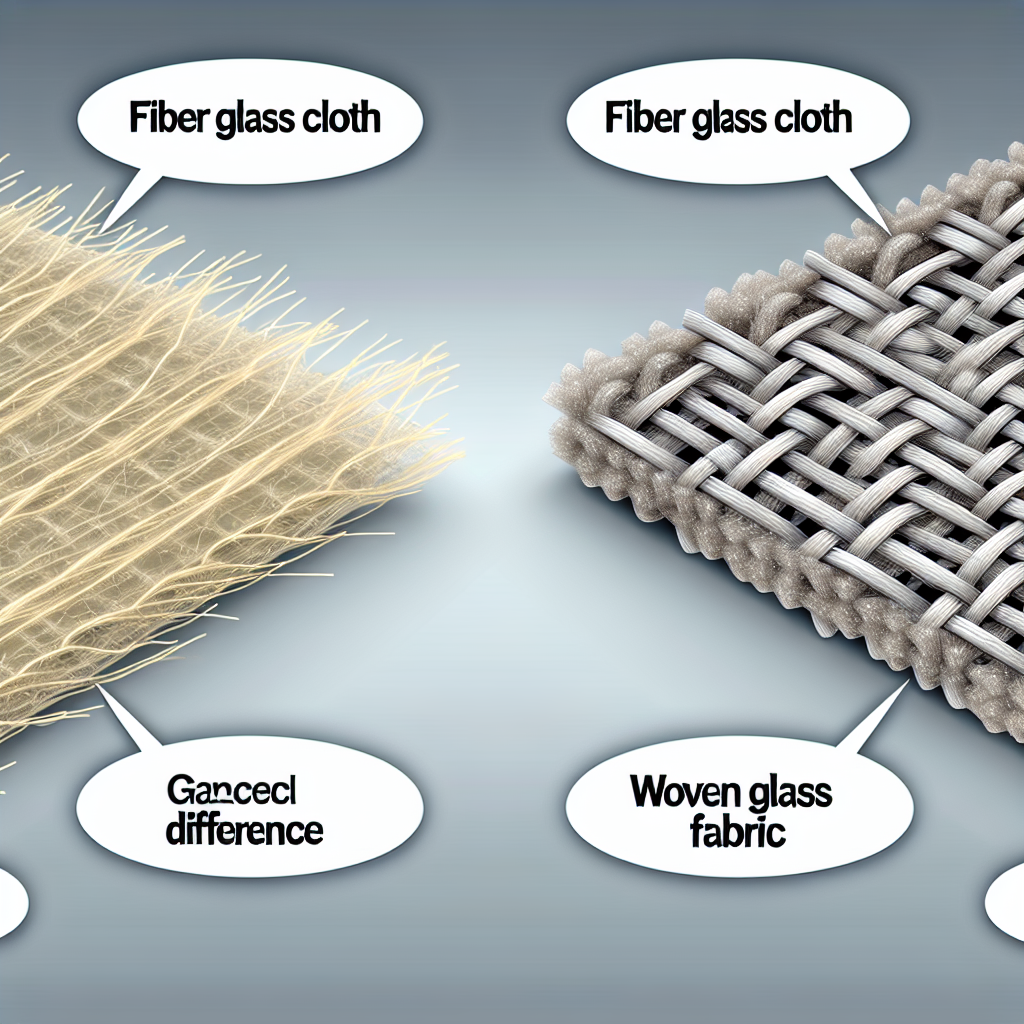
Woven glass fabric is a versatile material that has gained significant traction in various industries due to its unique characteristics and performance attributes. Composed of glass fibers that are intricately woven together, this fabric exhibits a combination of strength, durability, and lightweight properties, making it an ideal choice for applications that require both resilience and flexibility. One of the most notable characteristics of woven glass fabric is its high tensile strength, which allows it to withstand considerable stress without compromising its structural integrity. This strength is particularly advantageous in industries such as aerospace, automotive, and construction, where materials are often subjected to extreme conditions.
In addition to its impressive strength, woven glass fabric is also known for its excellent thermal resistance. The inherent properties of glass fibers enable the fabric to endure high temperatures without degrading, making it suitable for applications in environments where heat resistance is paramount. For instance, in the aerospace sector, woven glass fabric is frequently utilized in the manufacturing of components that must endure high thermal loads, such as insulation materials and fire-resistant barriers. Furthermore, its ability to resist chemical corrosion adds another layer of versatility, allowing it to be used in environments where exposure to harsh chemicals is a concern.
Another significant characteristic of woven glass fabric is its lightweight nature. Despite its strength, the fabric remains relatively light, which is a crucial factor in applications where weight reduction is essential. In the automotive industry, for example, manufacturers are increasingly turning to woven glass fabric to create lightweight components that contribute to overall fuel efficiency without sacrificing performance. This balance of weight and strength is also beneficial in the construction industry, where woven glass fabric can be used in composite materials to enhance structural performance while minimizing the overall weight of the building.
Moreover, woven glass fabric is highly adaptable, allowing it to be tailored for specific applications through various weaving techniques and fiber orientations. This adaptability means that manufacturers can produce fabrics with different weave patterns, such as plain, twill, or satin, each offering distinct performance characteristics. For instance, a plain weave provides a balanced combination of strength and flexibility, while a twill weave may offer enhanced drapability, making it easier to mold into complex shapes. This versatility extends to the range of finishes and coatings that can be applied to woven glass fabric, further enhancing its performance in specific environments.
In terms of applications, woven glass fabric is widely used in the production of composite materials, where it serves as a reinforcement layer in conjunction with resins. This combination results in materials that exhibit superior mechanical properties, making them suitable for high-performance applications. Additionally, woven glass fabric is employed in the manufacturing of electrical insulation materials, where its dielectric properties are invaluable. The fabric’s ability to withstand electrical stress while maintaining its structural integrity makes it a preferred choice in the electrical and electronics industries.
In conclusion, woven glass fabric stands out as a material of choice across various sectors due to its remarkable characteristics, including high tensile strength, thermal resistance, lightweight nature, and adaptability. Its diverse applications, ranging from aerospace to automotive and construction, underscore its importance in modern manufacturing processes. As industries continue to seek innovative solutions that combine performance with efficiency, woven glass fabric is poised to remain a key player in the development of advanced materials.
Key Material Differences Between Fiber Glass Cloth and Woven Glass Fabric
When comparing fiber glass cloth and woven glass fabric, it is essential to understand the fundamental differences that define these two materials. Both are integral to various industries, particularly in applications requiring durability, strength, and resistance to environmental factors. However, their distinct characteristics can significantly influence their suitability for specific applications.
To begin with, fiber glass cloth is typically made from continuous strands of glass fibers that are woven together to form a flexible and lightweight material. This construction allows for a high degree of versatility, making fiber glass cloth ideal for applications where flexibility and ease of handling are paramount. The continuous strands contribute to a uniform distribution of strength across the fabric, which is particularly beneficial in applications such as insulation, electrical components, and lightweight structural reinforcements. Furthermore, fiber glass cloth can be treated with various resins to enhance its properties, such as improving its resistance to moisture and chemicals, thereby expanding its usability in diverse environments.
In contrast, woven glass fabric is characterized by its more traditional weaving technique, where individual glass fibers are interlaced in a specific pattern. This method results in a denser and often thicker material compared to fiber glass cloth. The weaving process can create various patterns, such as plain, twill, or satin, each offering different mechanical properties and aesthetic qualities. The density of woven glass fabric typically provides superior strength and rigidity, making it particularly suitable for applications that require structural integrity, such as in the aerospace and automotive industries. Additionally, the interlacing of fibers in woven glass fabric can enhance its resistance to tearing and abrasion, further solidifying its role in demanding environments.
Moreover, the differences in manufacturing processes between fiber glass cloth and woven glass fabric also lead to variations in their thermal and electrical properties. Fiber glass cloth, due to its lightweight nature and the continuous strands, often exhibits better thermal insulation properties, making it a preferred choice for applications where heat resistance is critical. On the other hand, woven glass fabric, with its denser structure, tends to provide superior electrical insulation, which is essential in electrical and electronic applications. This distinction is crucial for engineers and designers when selecting materials for specific projects, as the choice can significantly impact performance and safety.
Another important aspect to consider is the cost and availability of these materials. Generally, fiber glass cloth is more readily available and often less expensive than woven glass fabric. This price difference can be attributed to the simpler manufacturing process of fiber glass cloth, which allows for mass production. Consequently, for projects with budget constraints or those requiring large quantities of material, fiber glass cloth may be the more practical option. However, for specialized applications where performance is paramount, the investment in woven glass fabric may be justified due to its enhanced properties.
In conclusion, while both fiber glass cloth and woven glass fabric share a common base material—glass fibers—their differences in construction, properties, and applications are significant. Understanding these distinctions is vital for selecting the appropriate material for specific needs, ensuring optimal performance and durability in various applications. As industries continue to evolve, the choice between these two materials will remain a critical consideration for engineers, designers, and manufacturers alike.
Q&A
1. **What is the primary difference in construction between fiberglass cloth and woven glass fabric?**
Fiberglass cloth is typically made from continuous strands of glass fibers that are laid out in a single layer, while woven glass fabric consists of interlaced strands of glass fibers, creating a more complex structure.
2. **How do the mechanical properties differ between fiberglass cloth and woven glass fabric?**
Woven glass fabric generally offers higher tensile strength and better dimensional stability due to its interwoven structure, whereas fiberglass cloth may be more flexible but less robust under stress.
3. **In what applications are fiberglass cloth and woven glass fabric typically used?**
Fiberglass cloth is often used for applications requiring lightweight and flexible materials, such as insulation and lightweight composites, while woven glass fabric is preferred in applications demanding higher strength and durability, such as in aerospace and automotive components.