


-
Table of Contents
“Electroplated vs Plain Glass Fiber Cloth: Choose Strength and Durability for Your Unique Applications.”
Introduction
Electroplated and plain glass fiber cloths are two distinct materials used in various industrial applications, each offering unique properties and benefits. Electroplated glass fiber cloth is coated with a layer of metal, enhancing its strength, conductivity, and resistance to environmental factors, making it suitable for applications in electronics, aerospace, and automotive industries. In contrast, plain glass fiber cloth is known for its lightweight, high tensile strength, and thermal resistance, making it ideal for insulation, reinforcement, and composite materials. This comparison explores the specific use cases of each type of cloth, highlighting their advantages and limitations in different applications.
Electroplated Glass Fiber Cloth: Advantages in High-Temperature Applications
Electroplated glass fiber cloth has emerged as a significant material in various high-temperature applications, primarily due to its unique properties that enhance performance and durability. One of the most notable advantages of electroplated glass fiber cloth is its ability to withstand extreme temperatures without compromising structural integrity. This characteristic is particularly beneficial in industries such as aerospace, automotive, and manufacturing, where components are often exposed to harsh thermal environments. The electroplating process involves coating the glass fibers with a thin layer of metal, which not only improves thermal resistance but also enhances the cloth’s overall mechanical strength.
Moreover, the electroplated layer provides additional benefits, such as increased resistance to chemical corrosion. In high-temperature settings, materials are frequently subjected to aggressive chemicals that can degrade their performance. The metal coating acts as a barrier, protecting the underlying glass fibers from corrosive substances, thereby extending the lifespan of the cloth. This durability is crucial in applications where maintenance and replacement can be costly and time-consuming. Consequently, industries that prioritize reliability and longevity often favor electroplated glass fiber cloth over its plain counterpart.
In addition to its thermal and chemical resistance, electroplated glass fiber cloth exhibits superior electrical insulation properties. This feature is particularly advantageous in electrical applications, where the risk of short circuits and electrical failures can be heightened by high temperatures. The metal coating not only enhances the cloth’s insulation capabilities but also allows for better heat dissipation, which is essential in preventing overheating of electrical components. As a result, manufacturers are increasingly incorporating electroplated glass fiber cloth into their designs to ensure safety and efficiency in high-temperature electrical environments.
Furthermore, the versatility of electroplated glass fiber cloth cannot be overlooked. It can be tailored to meet specific requirements by adjusting the thickness of the metal layer or the type of metal used in the electroplating process. This customization allows engineers to optimize the material for particular applications, whether it be in thermal barriers, insulation blankets, or protective gear. Such adaptability makes electroplated glass fiber cloth a preferred choice for projects that demand precision and performance under extreme conditions.
Transitioning from its technical advantages, it is also important to consider the economic implications of using electroplated glass fiber cloth. While the initial investment may be higher compared to plain glass fiber cloth, the long-term benefits often justify the cost. The enhanced durability and reduced need for maintenance can lead to significant savings over time, particularly in industries where downtime is costly. Therefore, decision-makers must weigh the upfront costs against the potential for increased efficiency and reduced operational risks.
In conclusion, electroplated glass fiber cloth stands out as a superior option for high-temperature applications due to its exceptional thermal resistance, chemical durability, and electrical insulation properties. Its versatility allows for customization to meet specific needs, making it an invaluable material in demanding environments. While the initial costs may be higher, the long-term benefits, including reduced maintenance and increased reliability, make it a wise investment for industries that cannot afford to compromise on performance. As technology continues to advance, the role of electroplated glass fiber cloth in high-temperature applications is likely to expand, further solidifying its position as a critical material in modern engineering and manufacturing.
Plain Glass Fiber Cloth: Cost-Effectiveness for General Use
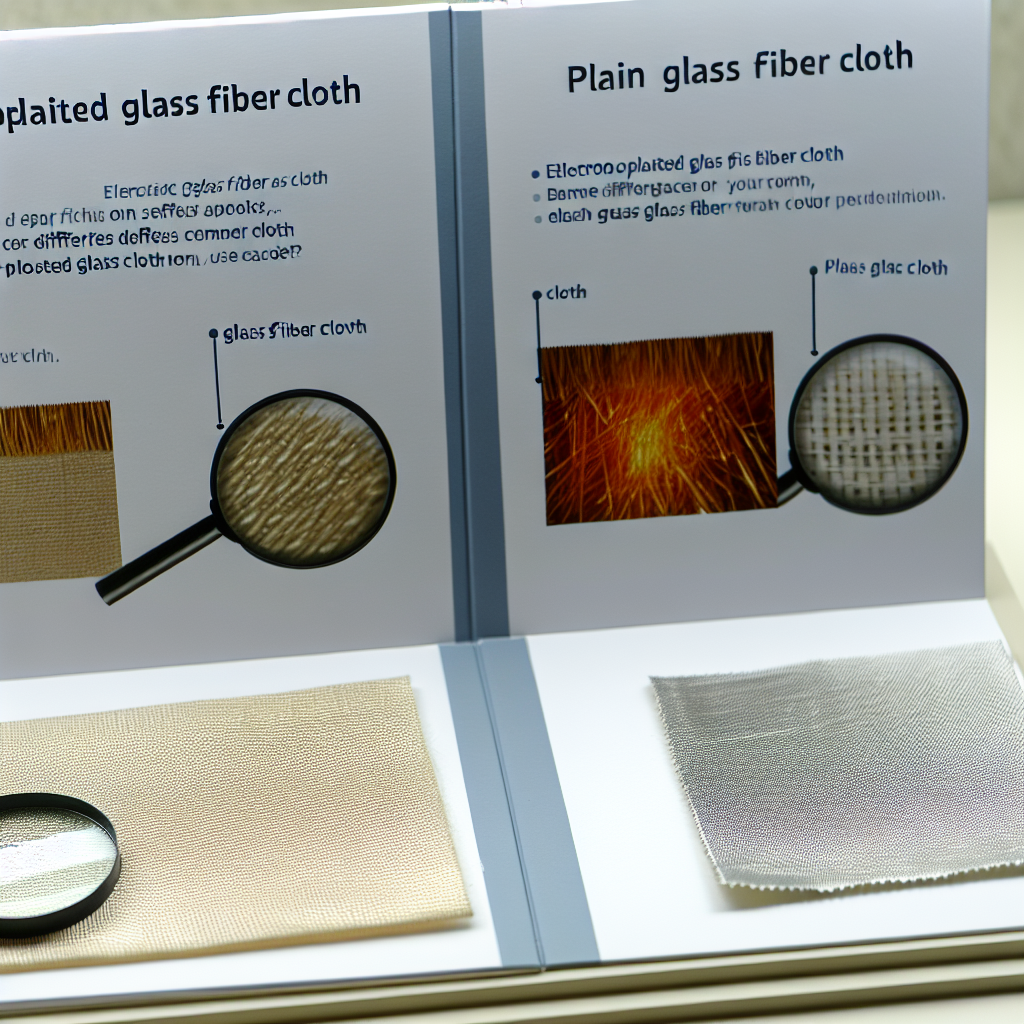
When considering materials for various applications, plain glass fiber cloth emerges as a cost-effective solution that caters to a wide range of general uses. This type of cloth, composed of woven glass fibers, is known for its durability and versatility, making it an attractive option for industries such as construction, automotive, and aerospace. One of the primary advantages of plain glass fiber cloth is its affordability. Compared to specialized materials like electroplated glass fiber cloth, which often incorporates additional coatings or treatments to enhance performance, plain glass fiber cloth provides a more budget-friendly alternative without sacrificing essential properties.
The inherent characteristics of plain glass fiber cloth contribute significantly to its appeal. For instance, it exhibits excellent tensile strength, which allows it to withstand considerable stress and strain. This strength is particularly beneficial in applications where structural integrity is paramount. Furthermore, plain glass fiber cloth is resistant to heat and chemicals, making it suitable for environments that may expose materials to harsh conditions. As a result, industries that require reliable and robust materials often turn to plain glass fiber cloth for their projects.
In addition to its strength and resistance properties, the ease of handling and installation of plain glass fiber cloth further enhances its practicality. The material can be cut, shaped, and applied with relative simplicity, allowing for efficient use in various applications. This ease of use is particularly advantageous in construction and manufacturing settings, where time and labor costs are critical factors. Consequently, the straightforward application process of plain glass fiber cloth can lead to significant savings in both time and resources.
Moreover, the versatility of plain glass fiber cloth extends to its compatibility with various resins and adhesives. This compatibility allows for seamless integration into composite materials, which are increasingly popular in modern engineering and design. By combining plain glass fiber cloth with different resins, manufacturers can create lightweight yet strong components that meet specific performance requirements. This adaptability makes plain glass fiber cloth an ideal choice for a wide array of applications, from insulation to reinforcement in composite structures.
While plain glass fiber cloth is an excellent option for general use, it is essential to recognize its limitations compared to more specialized materials like electroplated glass fiber cloth. The latter often provides enhanced properties, such as improved electrical conductivity or surface finish, which may be necessary for specific applications. However, for many standard applications, the cost-effectiveness and reliability of plain glass fiber cloth make it a preferred choice.
In conclusion, plain glass fiber cloth stands out as a cost-effective solution for general use across various industries. Its combination of strength, resistance to environmental factors, ease of handling, and compatibility with different materials positions it as a practical option for many applications. While it may not offer the specialized benefits of electroplated glass fiber cloth, its affordability and versatility ensure that it remains a staple in the materials market. As industries continue to seek efficient and reliable solutions, plain glass fiber cloth will undoubtedly maintain its relevance and utility in a wide range of applications.
Performance Comparison: Durability and Strength in Different Environments
When considering the performance of electroplated glass fiber cloth versus plain glass fiber cloth, it is essential to evaluate their durability and strength across various environments. Both materials are widely used in industries such as aerospace, automotive, and construction, yet their specific properties can significantly influence their suitability for particular applications. Understanding these differences is crucial for engineers and designers who seek to optimize material selection based on environmental conditions.
Electroplated glass fiber cloth is characterized by a coating of metal, typically nickel or copper, which enhances its mechanical properties. This coating not only increases the cloth’s resistance to corrosion but also improves its overall tensile strength. In environments where exposure to moisture, chemicals, or extreme temperatures is a concern, electroplated glass fiber cloth often outperforms its plain counterpart. For instance, in marine applications where saltwater exposure is inevitable, the electroplated variant provides a significant advantage due to its enhanced resistance to corrosion, thereby extending the lifespan of the material and reducing maintenance costs.
Conversely, plain glass fiber cloth, while still robust, lacks the additional protective layer that electroplating offers. This absence can make it more susceptible to environmental degradation, particularly in harsh conditions. However, plain glass fiber cloth is often favored in applications where weight is a critical factor, such as in the aerospace industry. Its lighter weight can contribute to overall fuel efficiency and performance, making it an attractive option despite its lower resistance to environmental factors. In controlled environments, where exposure to harsh chemicals or moisture is limited, plain glass fiber cloth can perform adequately, providing sufficient strength and durability for various applications.
Moreover, the thermal stability of both materials plays a significant role in their performance. Electroplated glass fiber cloth typically exhibits superior thermal resistance due to the metal coating, which can withstand higher temperatures without compromising structural integrity. This property is particularly beneficial in applications involving high heat, such as in automotive components or industrial machinery. In contrast, plain glass fiber cloth may begin to degrade at elevated temperatures, limiting its use in high-heat environments. Therefore, when selecting materials for applications that involve significant thermal stress, electroplated glass fiber cloth is often the preferred choice.
In addition to thermal and chemical resistance, the mechanical properties of both materials must be considered. Electroplated glass fiber cloth generally demonstrates higher tensile strength, making it suitable for applications that require robust load-bearing capabilities. This strength is particularly advantageous in construction and structural applications, where the material must withstand significant forces without failure. On the other hand, while plain glass fiber cloth may not match the tensile strength of its electroplated counterpart, it still offers adequate performance for less demanding applications, where the load requirements are lower.
Ultimately, the choice between electroplated and plain glass fiber cloth hinges on the specific requirements of the application at hand. While electroplated glass fiber cloth excels in durability and strength in challenging environments, plain glass fiber cloth remains a viable option for applications where weight and cost considerations are paramount. By carefully assessing the environmental conditions and performance requirements, engineers can make informed decisions that optimize material selection, ensuring both functionality and longevity in their projects.
Q&A
1. **Question:** What is the primary advantage of electroplated glass fiber cloth over plain glass fiber cloth in industrial applications?
**Answer:** Electroplated glass fiber cloth offers enhanced durability and resistance to chemical and thermal degradation, making it suitable for high-stress environments.
2. **Question:** In which applications is plain glass fiber cloth typically preferred over electroplated glass fiber cloth?
**Answer:** Plain glass fiber cloth is often preferred in applications where cost is a primary concern and the environment is less demanding, such as insulation and basic reinforcement.
3. **Question:** How does the performance of electroplated glass fiber cloth compare to plain glass fiber cloth in terms of electrical insulation?
**Answer:** Electroplated glass fiber cloth generally provides superior electrical insulation properties due to its enhanced surface treatment, making it ideal for electrical and electronic applications.