


Table of Contents
“Chopped Carbon Fiber: Unmatched Strength and Lightweight Versatility for Superior 3D Parts and Injection Molding.”
Introduction
Chopped carbon fiber has emerged as a preferred material in the manufacturing of 3D parts and injection molding due to its unique combination of strength, lightweight properties, and versatility. The incorporation of chopped carbon fiber into polymer matrices enhances mechanical performance, providing superior stiffness and impact resistance compared to traditional materials. Its ability to improve thermal stability and reduce warping during processing makes it particularly advantageous for complex geometries. Additionally, the ease of integration into various manufacturing processes, including additive manufacturing and injection molding, allows for the production of high-quality components that meet the demands of industries such as automotive, aerospace, and consumer goods. This introduction explores the key attributes that make chopped carbon fiber an ideal choice for advanced manufacturing applications.
Strength-to-Weight Ratio of Chopped Carbon Fiber
Chopped carbon fiber has emerged as a revolutionary material in the fields of 3D printing and injection molding, primarily due to its exceptional strength-to-weight ratio. This characteristic is particularly significant in applications where minimizing weight while maximizing strength is crucial, such as in the automotive, aerospace, and sporting goods industries. The unique properties of chopped carbon fiber stem from the inherent qualities of carbon fiber itself, which is known for its high tensile strength and rigidity. When processed into chopped strands, these fibers retain their advantageous attributes, making them an ideal choice for reinforcing various composite materials.
One of the most compelling aspects of chopped carbon fiber is its ability to enhance the mechanical properties of polymers. When incorporated into a polymer matrix, chopped carbon fiber significantly increases the material’s strength without adding substantial weight. This is particularly beneficial in applications where performance and efficiency are paramount. For instance, in the automotive sector, manufacturers are increasingly turning to chopped carbon fiber composites to produce lightweight components that contribute to improved fuel efficiency and reduced emissions. By replacing heavier materials with composites reinforced with chopped carbon fiber, vehicles can achieve better performance metrics while maintaining structural integrity.
Moreover, the strength-to-weight ratio of chopped carbon fiber allows for innovative design possibilities. Engineers and designers can create complex geometries that were previously unattainable with traditional materials. This flexibility in design not only enhances the aesthetic appeal of products but also optimizes their functionality. For example, in the aerospace industry, where every gram counts, the use of chopped carbon fiber can lead to the development of lighter aircraft components that do not compromise safety or performance. As a result, manufacturers can produce aircraft that are more fuel-efficient and environmentally friendly.
In addition to its mechanical advantages, chopped carbon fiber also offers excellent fatigue resistance. This property is crucial in applications where materials are subjected to repeated stress and strain. The durability of chopped carbon fiber composites ensures that parts maintain their integrity over time, reducing the likelihood of failure and the need for frequent replacements. Consequently, industries that rely on high-performance materials can benefit from the longevity and reliability of products made with chopped carbon fiber.
Furthermore, the processing of chopped carbon fiber into 3D printed parts and injection-molded components is relatively straightforward. The fibers can be easily mixed with various thermoplastics, allowing for seamless integration into existing manufacturing processes. This compatibility not only streamlines production but also enables manufacturers to leverage the advantages of chopped carbon fiber without overhauling their entire production systems. As a result, companies can quickly adapt to market demands and innovate their product offerings.
In conclusion, the strength-to-weight ratio of chopped carbon fiber makes it an ideal material for 3D parts and injection molding applications. Its ability to enhance the mechanical properties of polymers while remaining lightweight opens up new avenues for design and functionality across various industries. As manufacturers continue to explore the potential of chopped carbon fiber, it is likely that we will see an increasing number of applications that capitalize on its unique properties, ultimately leading to more efficient, durable, and innovative products. The future of material science is undoubtedly bright with the integration of chopped carbon fiber, paving the way for advancements that will shape the next generation of engineering and design.
Enhanced Thermal Stability in 3D Printing
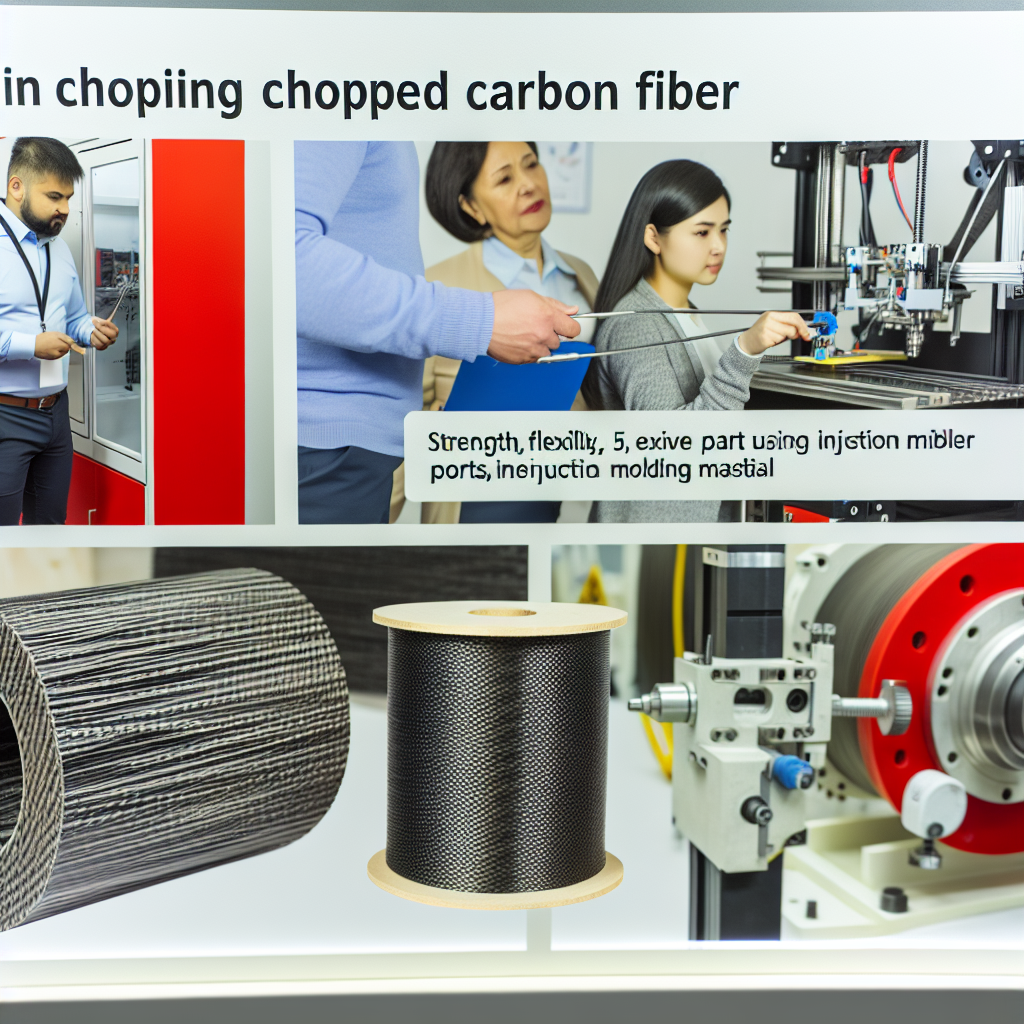
Chopped carbon fiber has emerged as a transformative material in the realm of 3D printing and injection molding, particularly due to its enhanced thermal stability. This characteristic is crucial for applications that demand precision and durability under varying temperature conditions. When discussing the thermal stability of chopped carbon fiber, it is essential to understand how its unique properties contribute to improved performance in manufacturing processes.
To begin with, the incorporation of chopped carbon fiber into thermoplastic matrices significantly elevates the thermal resistance of the resulting composite material. This enhancement is primarily attributed to the high thermal conductivity of carbon fibers, which allows for efficient heat dissipation during the printing process. As a result, parts produced with chopped carbon fiber can withstand higher temperatures without deforming or losing structural integrity. This is particularly beneficial in applications where components are exposed to elevated temperatures, such as automotive and aerospace industries, where reliability is paramount.
Moreover, the thermal stability provided by chopped carbon fiber is not merely a function of its composition but also relates to its ability to maintain dimensional accuracy during the printing process. Traditional thermoplastics can experience warping or shrinkage when subjected to heat, leading to inconsistencies in the final product. However, the addition of chopped carbon fiber mitigates these issues by reinforcing the polymer matrix, thereby reducing the likelihood of thermal expansion and contraction. This stability is vital for producing intricate designs and complex geometries, which are increasingly demanded in modern manufacturing.
In addition to dimensional stability, the thermal properties of chopped carbon fiber composites also enhance the overall performance of 3D-printed parts. For instance, components that require high strength-to-weight ratios benefit significantly from the use of chopped carbon fiber. The material’s ability to withstand thermal stress without compromising its mechanical properties ensures that parts remain functional and reliable even under challenging conditions. This is particularly advantageous in industries where weight reduction is critical, such as in aerospace applications, where every gram counts.
Furthermore, the enhanced thermal stability of chopped carbon fiber allows for greater flexibility in the design and production processes. Manufacturers can experiment with various printing parameters, such as temperature and speed, without the fear of compromising the quality of the final product. This adaptability not only streamlines production but also opens up new avenues for innovation in design, enabling engineers to create more complex and efficient components.
As the demand for high-performance materials continues to grow, the role of chopped carbon fiber in 3D printing and injection molding becomes increasingly significant. Its enhanced thermal stability not only improves the reliability and durability of parts but also fosters innovation in design and manufacturing processes. Consequently, industries that rely on precision-engineered components are likely to benefit from the unique properties of chopped carbon fiber, making it an ideal choice for a wide range of applications.
In conclusion, the enhanced thermal stability of chopped carbon fiber is a key factor that makes it an ideal material for 3D printing and injection molding. By providing superior heat resistance, maintaining dimensional accuracy, and allowing for innovative design possibilities, chopped carbon fiber stands out as a material that meets the rigorous demands of modern manufacturing. As technology continues to advance, the integration of chopped carbon fiber into production processes will undoubtedly play a pivotal role in shaping the future of high-performance components.
Cost-Effectiveness in Injection Molding Applications
Chopped carbon fiber has emerged as a transformative material in the realm of 3D printing and injection molding, particularly due to its cost-effectiveness. As industries increasingly seek to optimize production processes while maintaining high-quality standards, the integration of chopped carbon fiber into manufacturing practices has proven to be a strategic choice. This material not only enhances the mechanical properties of the final products but also offers significant economic advantages that are crucial for businesses aiming to remain competitive in a rapidly evolving market.
One of the primary reasons for the cost-effectiveness of chopped carbon fiber in injection molding applications lies in its ability to reduce material usage without compromising performance. Traditional materials often require larger quantities to achieve desired strength and durability, leading to increased costs in both raw materials and waste management. In contrast, the incorporation of chopped carbon fiber allows manufacturers to achieve similar or superior mechanical properties with a reduced volume of material. This reduction in material usage translates directly into lower production costs, making it an attractive option for companies looking to optimize their budgets.
Moreover, the processing efficiency of chopped carbon fiber contributes significantly to its cost-effectiveness. The material can be easily integrated into existing injection molding processes, which minimizes the need for extensive modifications to machinery or production lines. This compatibility not only streamlines the manufacturing process but also reduces downtime and associated costs. As a result, companies can achieve faster turnaround times and increased output, further enhancing their profitability. The ability to produce high-quality parts in shorter timeframes is particularly advantageous in industries where time-to-market is critical.
In addition to these processing benefits, the durability and longevity of products made with chopped carbon fiber can lead to substantial cost savings over time. Parts manufactured with this material exhibit superior resistance to wear, fatigue, and environmental factors, which means they often require less frequent replacement or maintenance. This longevity reduces the overall lifecycle costs associated with product ownership, making chopped carbon fiber an economically sound choice for manufacturers and end-users alike. By investing in materials that offer enhanced durability, companies can minimize the financial impact of repairs and replacements, thereby improving their bottom line.
Furthermore, the versatility of chopped carbon fiber allows for its application across a wide range of industries, from automotive to aerospace and consumer goods. This adaptability means that businesses can leverage the benefits of this material in various contexts, maximizing their return on investment. As companies explore new applications and innovations, the ability to utilize a single material that meets diverse requirements can lead to significant economies of scale. This versatility not only enhances cost-effectiveness but also fosters innovation, as manufacturers can experiment with new designs and functionalities without incurring prohibitive costs.
In conclusion, the cost-effectiveness of chopped carbon fiber in injection molding applications is a multifaceted advantage that encompasses material savings, processing efficiency, product longevity, and versatility. As industries continue to prioritize efficiency and sustainability, the adoption of chopped carbon fiber is likely to grow, driven by its ability to deliver high-performance solutions at a lower overall cost. By embracing this innovative material, manufacturers can not only enhance their production capabilities but also position themselves for success in an increasingly competitive landscape. The strategic integration of chopped carbon fiber into manufacturing processes represents a forward-thinking approach that aligns with the economic realities of modern production.
Q&A
1. **What are the mechanical properties of chopped carbon fiber that make it suitable for 3D parts and injection molding?**
Chopped carbon fiber enhances the mechanical properties of materials, providing increased strength, stiffness, and impact resistance, which are essential for durable 3D printed parts and injection-molded components.
2. **How does chopped carbon fiber affect the weight of 3D printed and injection-molded parts?**
Chopped carbon fiber is lightweight, allowing for the production of strong yet lightweight parts, which is crucial in applications where reducing weight is important, such as in automotive and aerospace industries.
3. **What is the impact of chopped carbon fiber on the thermal stability of 3D printed and injection-molded parts?**
Chopped carbon fiber improves the thermal stability of materials, enabling parts to withstand higher temperatures without deforming, making them suitable for applications that require heat resistance.