


Table of Contents
“Choose Your Strength: 3K for Precision, 6K for Versatility, 12K for Durability in Carbon Fiber Fabric.”
Introduction
Carbon fiber fabric is available in various weights, commonly categorized by the number of filaments per tow, such as 3K, 6K, and 12K. The “K” refers to the number of thousands of filaments in each tow, with 3K containing approximately 3,000 filaments, 6K containing 6,000, and 12K containing 12,000. The weight of the fabric influences its strength, stiffness, and application suitability. Lighter fabrics like 3K are often used in applications requiring high precision and detail, such as aerospace and automotive components, while heavier fabrics like 12K are typically utilized in applications where strength and durability are prioritized, such as in marine and industrial settings. Understanding the differences in fabric weight is crucial for selecting the appropriate material for specific engineering and design needs.
Comparison of 3K, 6K, and 12K Carbon Fiber Fabric Weights
When considering carbon fiber fabric for various applications, understanding the differences in weight between 3K, 6K, and 12K options is crucial. The designation of “K” refers to the number of filaments in the carbon fiber tow, with 3K indicating 3,000 filaments, 6K representing 6,000 filaments, and 12K denoting 12,000 filaments. Each of these weights has distinct characteristics that influence their suitability for specific projects, ranging from aerospace engineering to automotive manufacturing and even sporting goods.
To begin with, 3K carbon fiber fabric is often favored for applications that require a balance between strength and weight. With its relatively low filament count, 3K fabric is lightweight and offers excellent flexibility, making it ideal for intricate designs and components that demand precision. This type of fabric is commonly used in high-performance applications, such as in the production of racing bicycles, drones, and other lightweight structures where every gram counts. The fine weave of 3K fabric allows for a smooth finish, which is particularly advantageous in aesthetic applications where visual appeal is paramount.
In contrast, 6K carbon fiber fabric provides a middle ground between the lightweight properties of 3K and the robust strength of 12K. With double the filament count, 6K fabric exhibits increased tensile strength while still maintaining a manageable weight. This makes it suitable for applications that require a bit more durability without significantly compromising on weight. Industries such as automotive and marine often utilize 6K carbon fiber for components that must endure higher stress and strain, such as body panels and structural reinforcements. The versatility of 6K fabric allows it to be used in a variety of settings, from high-performance vehicles to recreational equipment, where a balance of strength and weight is essential.
On the other hand, 12K carbon fiber fabric is characterized by its high filament count, which translates to greater strength and rigidity. This type of fabric is typically heavier than its 3K and 6K counterparts, making it less suitable for applications where weight is a critical factor. However, the increased strength of 12K fabric makes it an excellent choice for structural applications that require significant load-bearing capabilities. Industries such as aerospace and construction often leverage 12K carbon fiber for components like aircraft wings and large structural elements, where the benefits of strength outweigh the disadvantages of added weight. Additionally, the thicker fibers in 12K fabric can provide a more textured finish, which may be desirable in certain design contexts.
In summary, the choice between 3K, 6K, and 12K carbon fiber fabric ultimately depends on the specific requirements of the application at hand. While 3K fabric excels in lightweight and flexible designs, 6K fabric offers a balanced approach with enhanced durability. Conversely, 12K fabric stands out for its strength and rigidity, making it suitable for heavy-duty applications. By understanding the unique properties of each type of carbon fiber fabric, engineers and designers can make informed decisions that align with their project goals, ensuring optimal performance and efficiency in their final products. As the demand for advanced materials continues to grow, the versatility of carbon fiber remains a key asset across various industries, underscoring the importance of selecting the right fabric weight for each unique application.
Impact of Carbon Fiber Fabric Weight on Performance
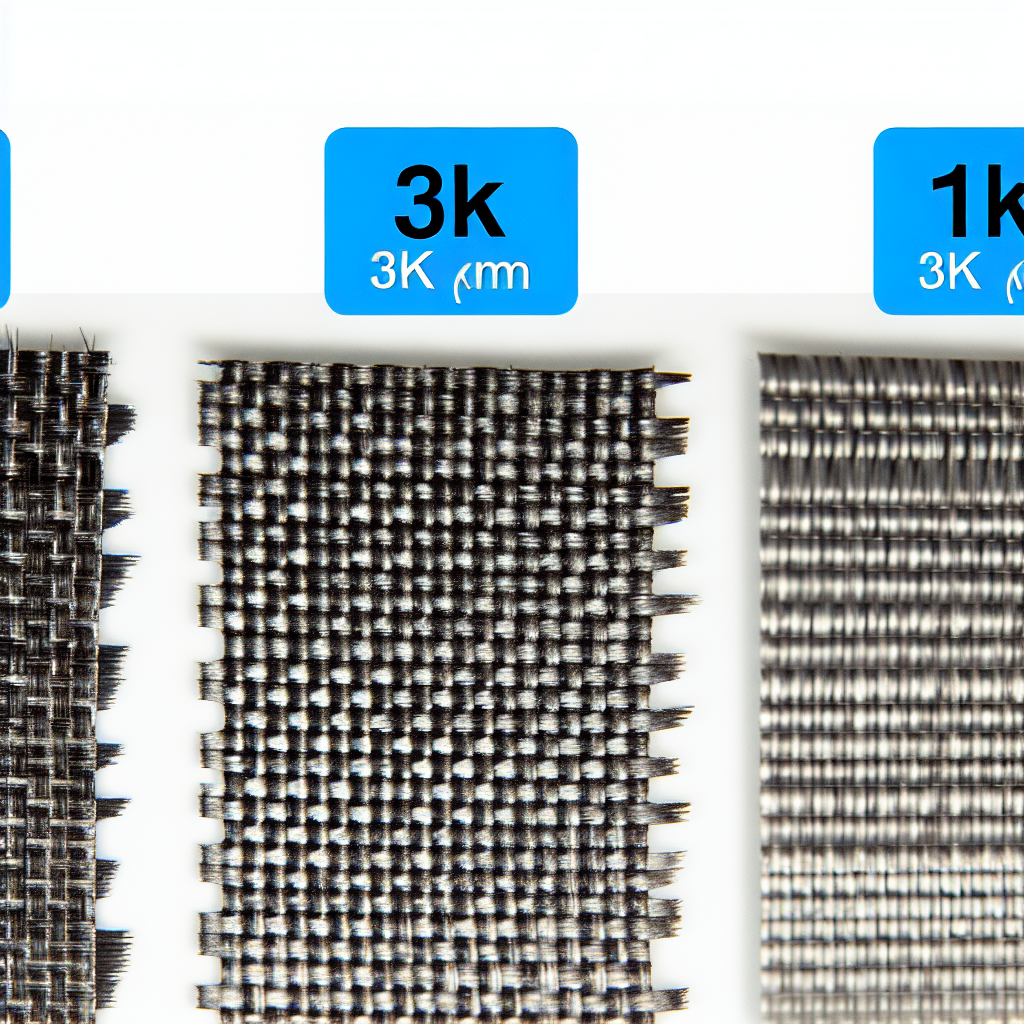
The weight of carbon fiber fabric plays a crucial role in determining its performance characteristics, influencing various applications across industries such as aerospace, automotive, and sporting goods. When comparing different fabric weights, specifically 3K, 6K, and 12K, it is essential to understand how these variations affect the overall properties of the material, including strength, flexibility, and durability.
To begin with, the designation of 3K, 6K, and 12K refers to the number of filaments in each tow of carbon fiber. A 3K fabric contains approximately 3,000 filaments per tow, while a 6K fabric has around 6,000 filaments, and a 12K fabric boasts about 12,000 filaments. This difference in filament count directly impacts the weight of the fabric, with higher filament counts generally resulting in heavier materials. Consequently, the choice of fabric weight can significantly influence the performance of the final product.
One of the primary considerations when selecting carbon fiber fabric weight is the balance between strength and weight. Lighter fabrics, such as 3K, are often preferred in applications where weight reduction is critical, such as in aerospace components or high-performance sports equipment. The reduced weight of 3K fabric allows for enhanced maneuverability and efficiency, making it an ideal choice for applications where performance is paramount. However, while 3K fabrics offer excellent strength-to-weight ratios, they may not provide the same level of stiffness and impact resistance as their heavier counterparts.
On the other hand, 6K and 12K fabrics, being heavier, tend to offer increased stiffness and durability. This makes them suitable for applications that require greater structural integrity, such as automotive parts or industrial components. The additional filaments in these fabrics contribute to their ability to withstand higher loads and resist deformation under stress. However, the trade-off is that the increased weight can lead to reduced performance in applications where agility and speed are essential.
Moreover, the choice of fabric weight also affects the ease of handling and processing during manufacturing. Lighter fabrics, like 3K, are generally easier to manipulate and conform to complex shapes, which can be advantageous in intricate designs. Conversely, heavier fabrics may require more robust handling techniques and equipment, potentially complicating the manufacturing process. Therefore, manufacturers must consider not only the performance requirements but also the practical aspects of working with different fabric weights.
In addition to strength and handling, the impact of carbon fiber fabric weight on thermal and chemical resistance should not be overlooked. Heavier fabrics often exhibit improved resistance to environmental factors, making them suitable for applications exposed to harsh conditions. This characteristic is particularly important in industries such as aerospace and automotive, where components must endure extreme temperatures and corrosive environments.
In conclusion, the weight of carbon fiber fabric—whether 3K, 6K, or 12K—significantly influences its performance characteristics. Lighter fabrics excel in applications demanding agility and speed, while heavier fabrics provide enhanced stiffness and durability for more demanding structural applications. Ultimately, the selection of fabric weight should be guided by the specific requirements of the intended application, balancing the need for strength, weight, and processing considerations to achieve optimal performance. As industries continue to evolve, understanding these nuances will be essential for engineers and designers seeking to leverage the unique properties of carbon fiber in their innovations.
Choosing the Right Carbon Fiber Fabric Weight for Your Project
When embarking on a project that requires the use of carbon fiber fabric, one of the most critical decisions involves selecting the appropriate fabric weight. Carbon fiber fabrics are available in various weights, commonly denoted as 3K, 6K, and 12K, each representing the number of filaments in the yarn. Understanding the differences between these weights is essential for ensuring that the final product meets the desired performance characteristics and structural integrity.
To begin with, 3K carbon fiber fabric consists of 3,000 filaments per tow, making it one of the lighter options available. This lightweight characteristic is particularly advantageous for applications where weight reduction is paramount, such as in aerospace and automotive industries. The 3K fabric offers excellent flexibility and drapability, allowing it to conform to complex shapes and contours. Consequently, it is often favored for projects that require intricate designs or where the fabric must be layered over curves. However, while the 3K fabric excels in flexibility, it may not provide the same level of strength and rigidity as heavier options, which can be a consideration for certain structural applications.
In contrast, 6K carbon fiber fabric, which contains 6,000 filaments per tow, strikes a balance between weight and strength. This medium-weight fabric is often chosen for applications that require a combination of durability and manageable weight. The 6K fabric offers improved stiffness compared to its 3K counterpart, making it suitable for components that must withstand higher loads or stresses. Additionally, the increased filament count enhances the overall tensile strength of the fabric, making it a popular choice for sporting goods, automotive parts, and various industrial applications. As a result, the 6K fabric serves as a versatile option that can accommodate a wide range of project requirements.
On the other hand, 12K carbon fiber fabric, with its 12,000 filaments per tow, is the heaviest option among the three. This fabric is designed for applications where maximum strength and rigidity are essential. The 12K fabric is often utilized in structural components, such as in marine applications or in the construction of large-scale industrial equipment. Its robust nature allows it to bear significant loads, making it ideal for projects that demand high-performance materials. However, the increased weight and reduced flexibility of the 12K fabric may limit its use in applications requiring intricate shapes or designs. Therefore, while it offers superior strength, careful consideration must be given to the specific requirements of the project.
Ultimately, the choice between 3K, 6K, and 12K carbon fiber fabric depends on the specific needs of the project at hand. Factors such as weight constraints, required strength, and the complexity of the design should all be taken into account. For projects prioritizing lightweight and flexibility, 3K fabric may be the best option. Conversely, if a balance of strength and weight is necessary, 6K fabric could be the ideal choice. For applications demanding maximum strength and rigidity, 12K fabric stands out as the most suitable option. By carefully evaluating these factors, one can make an informed decision that aligns with the project’s goals, ensuring optimal performance and durability in the final product.
Q&A
1. **What is the difference in fiber count between 3K, 6K, and 12K carbon fiber fabrics?**
3K carbon fiber has 3,000 filaments per tow, 6K has 6,000 filaments, and 12K has 12,000 filaments.
2. **How does the weight of carbon fiber fabric vary with the fiber count?**
Generally, higher K values (like 12K) result in heavier fabrics due to more filaments per tow, while lower K values (like 3K) produce lighter fabrics.
3. **What are the typical applications for 3K, 6K, and 12K carbon fiber fabrics?**
3K is often used for high-performance applications requiring lightweight and strength, 6K is used in a balance of weight and cost for various parts, and 12K is typically used in applications where high strength and rigidity are prioritized, such as in industrial or automotive components.