


-
Table of Contents
“Transform Your Vision: Precision 3D Printed Molds for Flawless Fiberglass Creations.”
Introduction
3D printed molds for fiberglass projects represent a revolutionary advancement in manufacturing and design, enabling creators to produce complex shapes and structures with precision and efficiency. By leveraging additive manufacturing technology, these molds can be customized to meet specific project requirements, reducing lead times and material waste. The ability to create intricate geometries that would be challenging or impossible to achieve with traditional mold-making techniques opens up new possibilities for artists, engineers, and hobbyists alike. Additionally, 3D printed molds can be designed for easy release and durability, enhancing the overall quality of fiberglass products. As the technology continues to evolve, the integration of 3D printing in fiberglass applications is poised to transform the industry, offering innovative solutions for a wide range of applications.
Advantages of Using 3D Printed Molds in Fiberglass Fabrication
The advent of 3D printing technology has revolutionized various industries, and fiberglass fabrication is no exception. One of the most significant advancements in this field is the use of 3D printed molds, which offer a multitude of advantages over traditional mold-making techniques. By integrating 3D printing into the fiberglass production process, manufacturers can achieve greater precision, efficiency, and customization, ultimately enhancing the quality of the final product.
To begin with, one of the primary benefits of using 3D printed molds is the remarkable precision they provide. Traditional mold-making methods often involve labor-intensive processes that can introduce human error, leading to inconsistencies in the final product. In contrast, 3D printing allows for the creation of highly detailed and accurate molds that can replicate complex geometries with ease. This precision is particularly advantageous in fiberglass projects, where even minor discrepancies can affect the structural integrity and aesthetic appeal of the finished piece. As a result, manufacturers can produce components that meet stringent specifications, thereby improving overall quality and performance.
Moreover, the efficiency of 3D printed molds significantly reduces production time. Traditional mold fabrication can be a lengthy process, often requiring weeks or even months to complete. In contrast, 3D printing can produce molds in a matter of days, allowing for quicker turnaround times. This rapid prototyping capability enables manufacturers to iterate designs more swiftly, facilitating a more agile response to market demands. Consequently, businesses can capitalize on new opportunities and reduce time-to-market for their fiberglass products, ultimately enhancing competitiveness in an increasingly fast-paced industry.
In addition to speed and precision, the customization potential offered by 3D printed molds is another compelling advantage. With traditional mold-making techniques, creating custom molds can be prohibitively expensive and time-consuming, particularly for small production runs. However, 3D printing allows for the easy modification of designs, enabling manufacturers to create bespoke molds tailored to specific project requirements without incurring significant additional costs. This flexibility is particularly beneficial for industries that require unique or specialized components, as it allows for greater innovation and creativity in product design.
Furthermore, the material efficiency of 3D printed molds contributes to their appeal in fiberglass fabrication. Traditional mold-making often results in substantial waste, as excess material is cut away or discarded during the fabrication process. In contrast, 3D printing utilizes only the necessary material to create the mold, minimizing waste and promoting sustainability. This aspect is increasingly important in today’s environmentally conscious market, where businesses are seeking ways to reduce their ecological footprint. By adopting 3D printing technology, manufacturers can not only enhance their operational efficiency but also align with sustainable practices that resonate with consumers.
Lastly, the integration of 3D printed molds into fiberglass fabrication can lead to cost savings over time. While the initial investment in 3D printing technology may be significant, the long-term benefits often outweigh these costs. Reduced labor expenses, minimized material waste, and faster production times contribute to lower overall manufacturing costs. As a result, businesses can achieve higher profit margins while maintaining competitive pricing for their products.
In conclusion, the advantages of using 3D printed molds in fiberglass fabrication are manifold. From enhanced precision and efficiency to greater customization and sustainability, this innovative approach is transforming the way manufacturers produce fiberglass components. As the technology continues to evolve, it is likely that the adoption of 3D printed molds will become increasingly prevalent, further shaping the future of the fiberglass industry.
Step-by-Step Guide to Creating 3D Printed Molds for Fiberglass
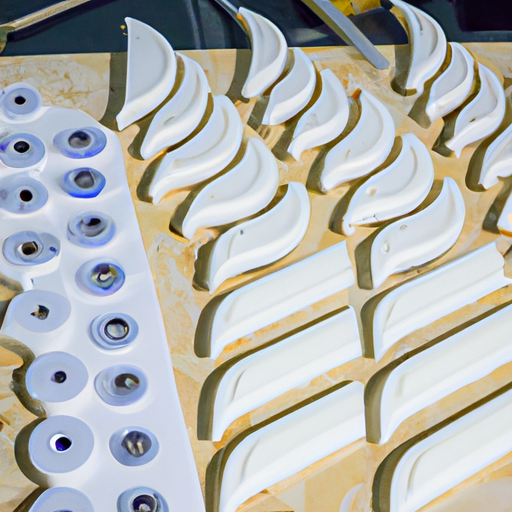
Creating 3D printed molds for fiberglass projects is an innovative approach that combines modern technology with traditional craftsmanship. This process not only enhances precision but also allows for greater creativity in design. To embark on this journey, one must first understand the essential steps involved in producing effective 3D printed molds tailored for fiberglass applications.
The initial phase involves conceptualizing the design of the mold. This step is crucial, as it lays the foundation for the entire project. Utilizing computer-aided design (CAD) software, one can create a detailed 3D model of the desired mold. It is important to consider the dimensions, contours, and any intricate features that will be required for the final fiberglass product. During this stage, it is advisable to keep in mind the properties of fiberglass, such as its curing process and the need for adequate release agents, which will influence the mold’s design.
Once the design is finalized, the next step is to prepare the 3D model for printing. This involves exporting the CAD file into a format compatible with 3D printing, typically STL or OBJ. Following this, one must select the appropriate 3D printing technology. Fused deposition modeling (FDM) and stereolithography (SLA) are two popular methods, each with its own advantages. FDM is generally more accessible and cost-effective, while SLA offers higher resolution and smoother finishes. The choice of material for the 3D print is also critical; common options include PLA, ABS, or resin, depending on the required strength and detail of the mold.
After selecting the printing method and material, the next step is to set up the 3D printer. This includes calibrating the printer, ensuring that the build plate is level, and loading the chosen filament or resin. Once the printer is ready, the mold can be printed. This process may take several hours to days, depending on the complexity and size of the mold. It is essential to monitor the printing process to address any issues that may arise, such as filament jams or misalignments.
Upon completion of the printing process, the mold will require post-processing. This step often involves removing any support structures, sanding rough edges, and applying a sealant or primer to enhance the mold’s surface finish. These actions are vital, as they ensure that the mold is smooth and free from imperfections that could affect the final fiberglass product. Additionally, applying a release agent to the mold is crucial to facilitate the easy removal of the fiberglass once it has cured.
With the mold prepared, the next phase is to mix the fiberglass resin and hardener according to the manufacturer’s instructions. It is important to work in a well-ventilated area and to wear appropriate safety gear, including gloves and a mask, to protect against fumes. Once the resin is mixed, it can be poured into the mold, ensuring that it fills all cavities and contours. After pouring, it is advisable to use a brush or roller to spread the resin evenly and eliminate any air bubbles.
Finally, the fiberglass must be allowed to cure fully, which may take several hours to days, depending on the specific resin used. Once cured, the mold can be carefully removed, revealing the finished fiberglass product. This method of creating 3D printed molds not only streamlines the production process but also opens up new possibilities for intricate designs and custom shapes in fiberglass projects. By following these steps, one can effectively harness the power of 3D printing to enhance their fiberglass crafting endeavors.
Common Challenges and Solutions in 3D Printing Molds for Fiberglass Projects
The integration of 3D printing technology into the production of molds for fiberglass projects has revolutionized the manufacturing landscape, offering unprecedented precision and customization. However, this innovative approach is not without its challenges. Understanding these common obstacles and their corresponding solutions is essential for achieving successful outcomes in fiberglass applications.
One of the primary challenges encountered in 3D printing molds is the selection of appropriate materials. Traditional 3D printing filaments, such as PLA or ABS, may not withstand the high temperatures and chemical exposure associated with fiberglass resins. Consequently, it is crucial to opt for materials specifically designed for mold-making, such as high-temperature resistant thermoplastics or composite filaments. These materials not only endure the curing process of fiberglass but also provide the necessary durability and structural integrity required for repeated use. By carefully selecting the right filament, manufacturers can mitigate the risk of mold deformation or failure during the fiberglass application.
Another significant challenge lies in achieving the desired surface finish of the mold. The layer lines inherent in 3D printing can lead to imperfections that may transfer to the final fiberglass product, resulting in an unsatisfactory surface quality. To address this issue, post-processing techniques such as sanding, filling, and applying a mold release agent can be employed. Sanding the mold surface smoothens out the layer lines, while filling any gaps or imperfections with epoxy or a similar compound can enhance the overall finish. Additionally, applying a mold release agent not only aids in the demolding process but also contributes to a smoother surface, ultimately improving the quality of the fiberglass part.
Furthermore, the design of the mold itself presents unique challenges. Complex geometries, undercuts, and intricate details can be difficult to achieve with traditional mold-making methods. However, 3D printing allows for the creation of highly complex designs that would otherwise be impossible or prohibitively expensive to produce. Nevertheless, it is essential to consider the limitations of the 3D printing process, such as the need for support structures in overhangs or intricate features. To overcome this, designers should utilize advanced modeling software that can simulate the printing process, allowing for the optimization of the mold design. By strategically planning the orientation and support structures, manufacturers can ensure that the final mold meets both functional and aesthetic requirements.
In addition to these technical challenges, there is also the issue of time management and production efficiency. While 3D printing can significantly reduce lead times compared to traditional methods, the printing process itself can be time-consuming, especially for large molds. To enhance efficiency, manufacturers can explore the use of multi-material printers that allow for the simultaneous production of multiple components or sections of a mold. This approach not only accelerates the overall production timeline but also enables greater flexibility in design modifications.
In conclusion, while the use of 3D printed molds for fiberglass projects presents several challenges, these can be effectively addressed through careful material selection, post-processing techniques, thoughtful design considerations, and efficient production strategies. By navigating these obstacles with informed solutions, manufacturers can harness the full potential of 3D printing technology, leading to enhanced quality and innovation in fiberglass applications. As the industry continues to evolve, ongoing research and development will likely yield even more effective strategies for overcoming these challenges, further solidifying the role of 3D printing in mold-making for fiberglass projects.
Q&A
1. **What are 3D printed molds used for in fiberglass projects?**
3D printed molds are used to create precise and complex shapes for fiberglass components, allowing for efficient production and customization in various applications such as automotive, marine, and aerospace industries.
2. **What materials are commonly used for 3D printing molds for fiberglass?**
Common materials for 3D printing molds include PLA, ABS, and nylon, with some advanced options like resin or high-temperature thermoplastics for better durability and heat resistance.
3. **What are the advantages of using 3D printed molds over traditional mold-making methods?**
Advantages include reduced lead time, lower costs for small production runs, the ability to easily modify designs, and the capability to create intricate geometries that may be difficult or impossible to achieve with traditional methods.3D printed molds for fiberglass projects offer significant advantages, including design flexibility, reduced production time, and cost-effectiveness. They enable intricate shapes and customizations that traditional mold-making methods may struggle to achieve. Additionally, the rapid prototyping capabilities of 3D printing allow for quick iterations and adjustments, enhancing the overall efficiency of the project. As the technology continues to advance, the integration of 3D printed molds in fiberglass applications is likely to become increasingly prevalent, driving innovation and improving the quality of finished products.