


3K, 6K, 12K, plain weave, twill, satin, spread tow, GSM — how do you pick? I pick fabrics for buyers every day. Here’s what I’ve learned.
If you’re comparing carbon fiber fabrics and wondering which one actually works for your project, you’re not alone. I get this question a few times a week. The thing is, it’s not just about picking the black cloth that looks right. Tow size, weave pattern, weight, quality grade — each one changes how the fabric behaves. Pick wrong and you waste time and money.
Let me walk through what I’ve seen work in practice across hundreds of orders.
What Actually Is Carbon Fiber Fabric?
It’s a woven textile made from carbon filaments. Those filaments get bundled into tows, and the tows get woven on industrial looms. The result is a dry fabric that becomes a structural composite once you add resin.
We make carbon fiber fabrics from 1K all the way up to 24K tow sizes, in plain, twill, and satin weaves, ranging from 80 gsm to 600 gsm.
Tow Sizes: What 1K, 3K, 6K, 12K & 24K Actually Mean
The “K” is shorthand for thousand filaments. So 3K fabric is woven from tows that each contain 3,000 individual carbon filaments. The number changes thickness, weight, surface finish, and price.
| Tow Size | Filaments per Tow | Typical GSM Range | Best For |
|---|---|---|---|
| 1K | 1,000 | 90-120 gsm | High-end cosmetics, medical devices, aerospace interiors |
| 3K | 3,000 | 160-280 gsm | General-purpose composites, automotive, drones, sporting goods |
| 6K | 6,000 | 200-400 gsm | Marine, structural reinforcement, industrial parts |
| 12K | 12,000 | 400-600 gsm | Large structures, wind turbine blades, heavy-duty industrial |
| 24K | 24,000 | 600 gsm+ | Infrastructure, thick layups, cost-sensitive heavy composites |
3K 240 gsm is the default for a reason. It hits a sweet spot — easy to handle, good surface finish, strong enough for most applications. If you don’t know where to start, 3K 240 gsm twill is the safe bet.
12K has been gaining ground for industrial work because the cost per square meter is significantly lower. With spread tow technology, modern 12K fabrics can be as thin as 3K, which barely anyone expected five years ago.
Weave Patterns: Plain, Twill, Satin & Spread Tow
Plain Weave
Each tow passes alternately over and under every intersecting tow. Think basket weave — tight and symmetrical.
When to use it: Flat laminates, jobs where structural symmetry matters. It’s the most stable weave — the fabric holds its shape during handling and won’t distort easily. Ideal for flat panels.
Twill Weave
Tows pass over two or more cross tows in a staggered pattern, creating that familiar diagonal “step” look.
When to use it: Curved surfaces, cosmetic parts, general composite work. It drapes better than plain weave — meaning it conforms to curves without fighting you. Our 2×2 twill 3K 240 gsm is far and away our best seller.
Satin Weave
Tows “float” over several cross tows before interlacing, resulting in a smooth, shiny surface with minimal crimp.
When to use it: High-end cosmetic parts, aerospace, prepreg work. Best flexibility, best surface finish. Less crimp means better in-plane strength. The trade-off? Least stable weave — easy to distort during handling.
Spread Tow
Tows are spread flat into thin, wide ribbons before weaving. The result is an ultra-thin fabric with almost no crimp.
When to use it: Lightweight structures, racing components, weight-critical builds. Available from 80 gsm to 200 gsm, typically in 12K or 24K. Spread tow is gaining traction in automotive and aerospace for the flat look and solid mechanicals.
Our Carbon Fiber Products
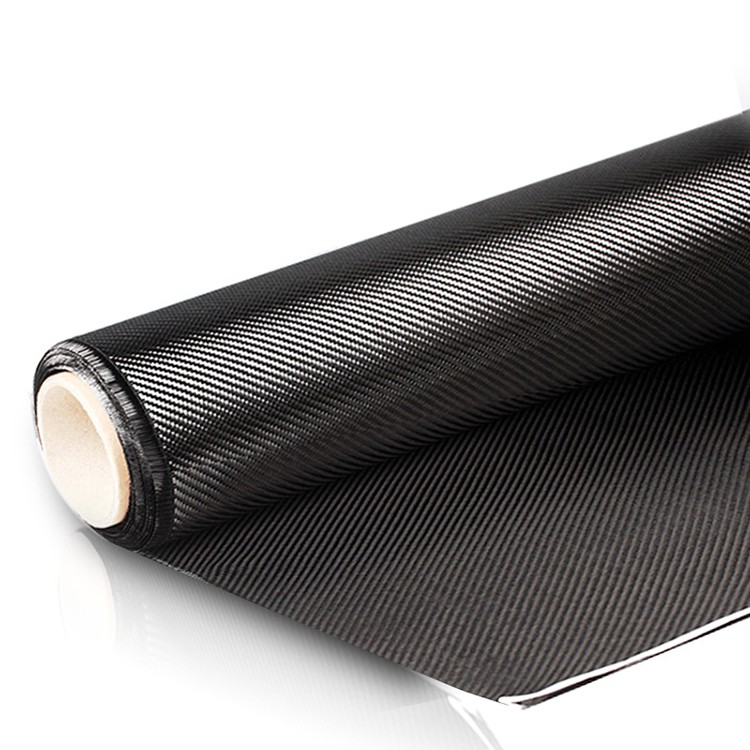 |
Carbon Fiber FabricAvailable in plain weave, twill, and satin. 3K, 6K, 12K. 160-600 gsm. Standard industrial grade for structural laminates. |
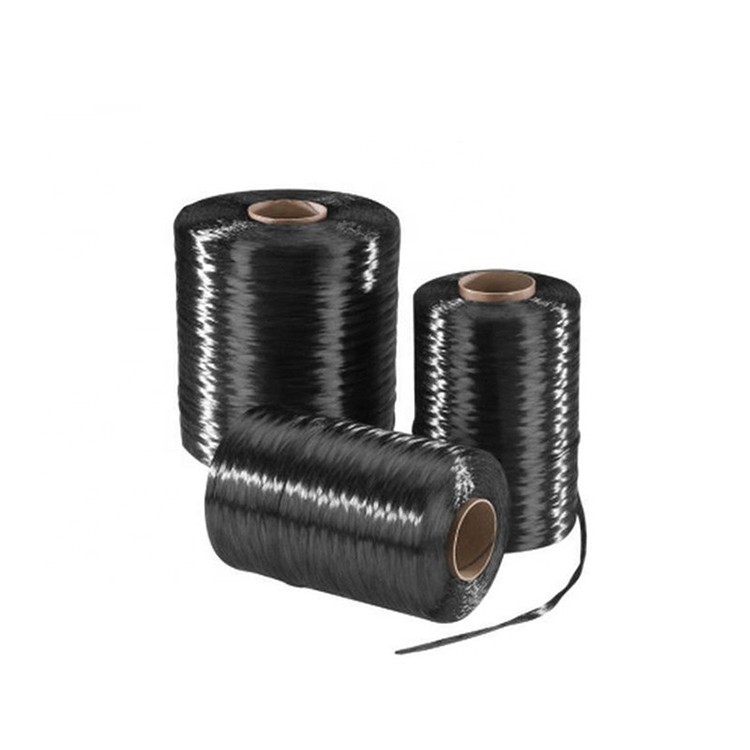 |
Carbon Fiber YarnRaw carbon fiber tows for weaving, braiding, and filament winding. Available from 1K to 24K. |
GSM: Areal Weight Explained
GSM = grams per square meter. It’s how heavy your fabric is, and picking the right one determines your laminate’s final thickness.
| Weight Range | Typical Uses |
|---|---|
| 80-100 gsm | Ultra-light decorative layers, surface veils, thin prepregs |
| 160-200 gsm | General-purpose laminates, repair and reinforcement |
| 220-280 gsm | Structural parts, aerospace components, sporting goods |
| 300-400 gsm | Heavy-duty structures, thick layups, marine hulls |
| 480-600 gsm | Infrastructure, thick sections, cost-focused industrial parts |
A rough rule I’ve found useful: fewer layers of heavy fabric means faster builds. More layers of lighter fabric means better fiber-to-resin ratio and surface quality. Fabrics above 400 gsm build thickness quickly but are harder to wet out by hand. Lighter ones (160-200 gsm) are easier to work with and give a nicer finish.
What to Look for in a Supplier
All carbon fiber fabrics are not created equal. Here’s what separates the good suppliers from the rest, based on what I’ve seen:
Straight tows — The tows should run straight and evenly spaced. Crooked tows mean uneven load distribution in the finished part. I’ve seen parts fail because nobody checked the fabric before layup.
Tight weave — The warp and weft intersections should be snug and uniform. A loose weave shifts during layup and creates voids. If you hold it up to the light and see big gaps between tows, send it back.
Sizing match — The surface treatment (sizing) needs to match your resin system. Epoxy-compatible sizing is the default. If you’re using polyester or vinyl ester, check compatibility first. I’ve seen a whole batch of parts delaminate because someone assumed the sizing was universal.
Batch records — A decent supplier gives you batch numbers and test data per run. If you make certified parts, this isn’t optional. If a supplier can’t produce batch records, walk away.
Sample first — Buy a sample before committing to bulk. Test how it wets out, how it handles, what the cured laminate looks like. If the sample is bad, the bulk order will be worse. I’ve never seen a case where a bad sample turned into good bulk.
Frequently Asked Questions
What’s the best all-around carbon fiber fabric?
3K 240 gsm 2×2 twill. It’s the default for a reason — handles well, good surface finish, strong enough for most applications. If you don’t know what you need, start here.
What’s the difference between 3K and 12K carbon fiber?
3K has 3,000 filaments per tow, 12K has 12,000. 3K gives a finer surface finish and is easier to work with on complex shapes. 12K is thicker, heavier, and cheaper per square meter. If you’re building large flat structures, 12K is more economical. If appearance matters, go 3K.
Can I use carbon fiber fabric outdoors?
Carbon fiber itself is UV resistant, but the resin system may not be. Epoxy degrades in sunlight unless protected by a UV-resistant topcoat or paint. If your part lives outdoors, plan for a UV barrier layer.
What GSM do I need for a structural part?
It depends on your load requirements and how many layers you’re planning. A common starting point: 3 layers of 240 gsm twill gives roughly 1mm cured thickness and handles moderate structural loads. For high-load parts, you’ll need more layers or higher GSM. Run the numbers — don’t guess.
Not Sure Which Fabric Fits Your Project?
We do this every day. Tell us your requirements — we’ll steer you toward the right fabric. Free samples included.
Samples for qualified buyers. Typical delivery 5-10 business days.